Waterford Township basements and the lakes the Clinton runs through
Waterford has 34 named lakes. The Clinton River comes down from Clarkston after starting in the wetlands of northern Oakland County, passes through Woodhull Lake and Lake Oakland, then Loon Lake and Schoolhouse Lake, and heads east toward Pontiac. The first settlers dammed it in 1819 where it crossed the Saginaw Trail, now Dixie Highway, and built a sawmill. That’s where Waterford Village started.
Water was the whole reason for this place. It’s still the main reason basements here get wet. Cass Lake, the biggest lake in the county, touches the township too, along with Pontiac Lake, Williams Lake and dozens of smaller ones, so a lot of Waterford houses are never more than a few streets from a shoreline.
Lakefront ranches and winterized cottages
Elizabeth Lake was a resort community before it was a neighborhood, and today it has streets of 1950s ranches. Around many of the smaller lakes you’ll find old cottages that were insulated and expanded until they became year-round houses. Drayton Plains, Clintonville and the area around Four Towns filled in with the same kind of modest postwar housing.
The ranches mostly sit on concrete block. Block is fine until water gets into it, and after sixty-plus years most of it has. Water seeps through the mortar joints, fills the hollow cores, and leaks out along the bottom course where the wall meets the floor. You’ll see white mineral crust on the wall, a dark line along the floor and a step crack running down from a corner. The original drain tile, if it’s there at all, is usually silted shut.
Cottages are less predictable. A crawl space under the old part, block under the newer part, and a joint between them that nobody waterproofed. That joint is where we start looking.
Lake levels, and why spring is the bad season
Several of the bigger lakes here are held at a legal level by dams. Lake Oakland and Woodhull, for example, share one set elevation, controlled by two dams at the outlet where the Clinton leaves. In a wet spring the lakes run high, the river runs high, and groundwater around the shore comes up with them. A house a few feet above the waterline can go from dry to seeping in a week.
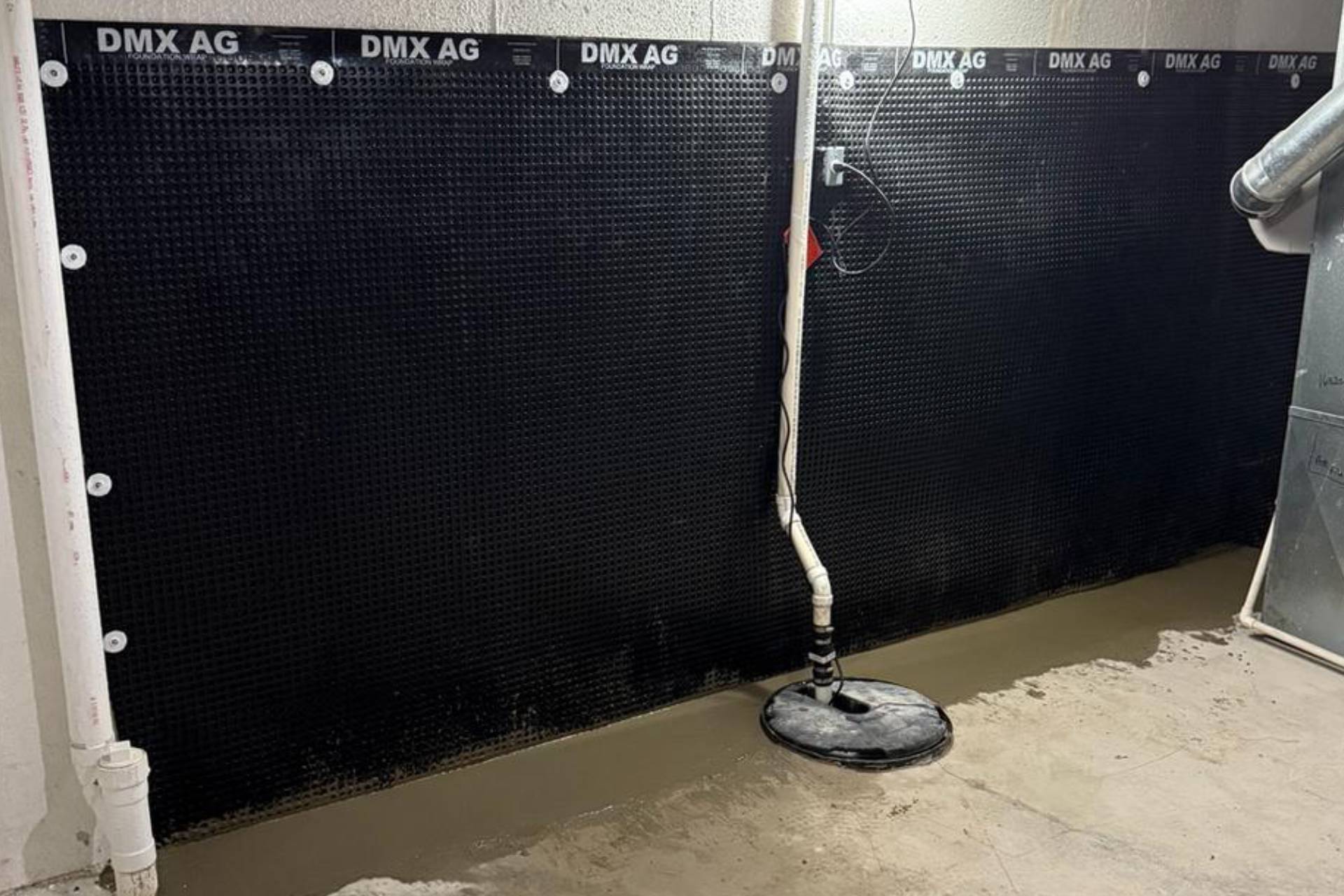
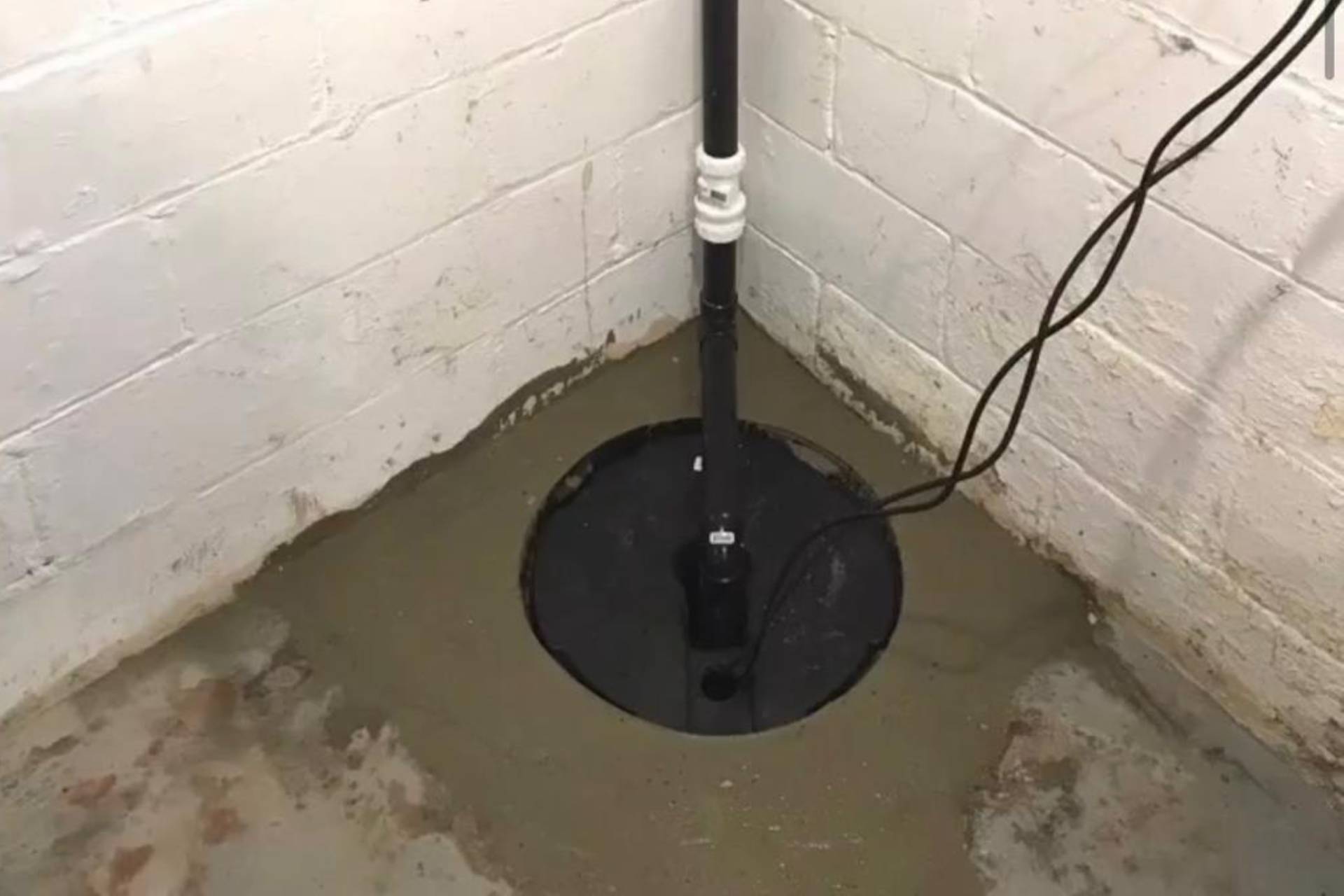
That’s water pushing from underneath, and no coating on the inside of a wall will stop it. What works is interior drain tile around the footing, a proper sump pit and a pump that can keep up.
About your backup pump
Waterford’s township water comes from its own wells rather than from Detroit, and most houses on it have plenty of pressure to run a water-powered backup pump. That’s a nice option because it doesn’t need a battery. If you’re on a private well, skip it, since the well stops when the power does, and go with a battery backup instead.
Before you call us
Walk around the house in the rain. Look at where the downspouts empty and which way the ground slopes. Plenty of Waterford lots near the lakes are flat, and if water is pooling against the foundation, regrading and downspout extensions may solve it for a lot less than a drainage system. If that’s the answer, we’ll tell you.
We’re about 35 minutes west on M-59. Estimates are free, and we pick up emergency calls overnight.