Walled Lake basements and a very mixed housing stock
The city takes its name from the lake, which settlers in the 1820s said looked like it had a stone wall along part of the shore. The lake is about 670 acres and 53 feet at its deepest, and roughly two-thirds of it belongs to Novi. The city of Walled Lake is the older, smaller piece to the north, incorporated in 1954, with about 7,200 people on two and a half square miles.
For a lot of metro Detroit, Walled Lake meant the amusement park and the dance casino. The park ran from 1929 to 1968, and the casino burned on Christmas Day 1965. The summer crowds left. The cottages that had grown up around them mostly stayed, got winterized and became year-round houses. Today the old park site is Pavilion Shore Park, and the Michigan Air Line Trail runs through town on the old rail bed, past the trailhead on Pontiac Trail just north of Maple.
Three eras on one street
That history is why basements here don’t follow one pattern. Walk Angle Road or the side streets off Pontiac Trail and you’ll pass a house from around 1900, a two-bedroom from 1950 and something from the 1990s, sometimes right next to each other.
Before 1940
Expect fieldstone, brick or rough early block, often shallow, sometimes with a dirt or thin concrete floor. Water comes through the joints and up at the base. We’d rather add drainage and repoint the worst sections than try to make these walls watertight, because they were never built to be.
The 1950s and ’60s
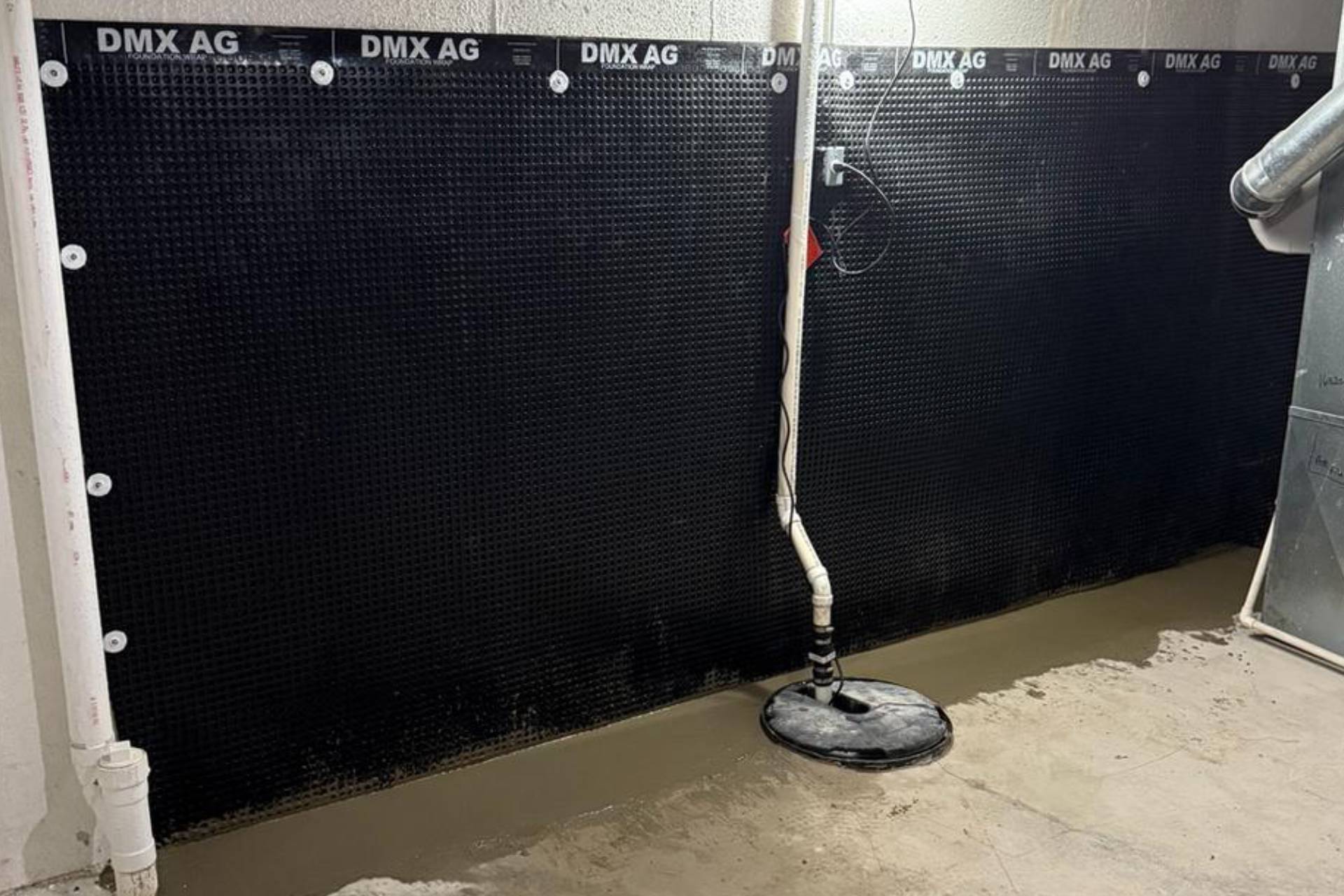
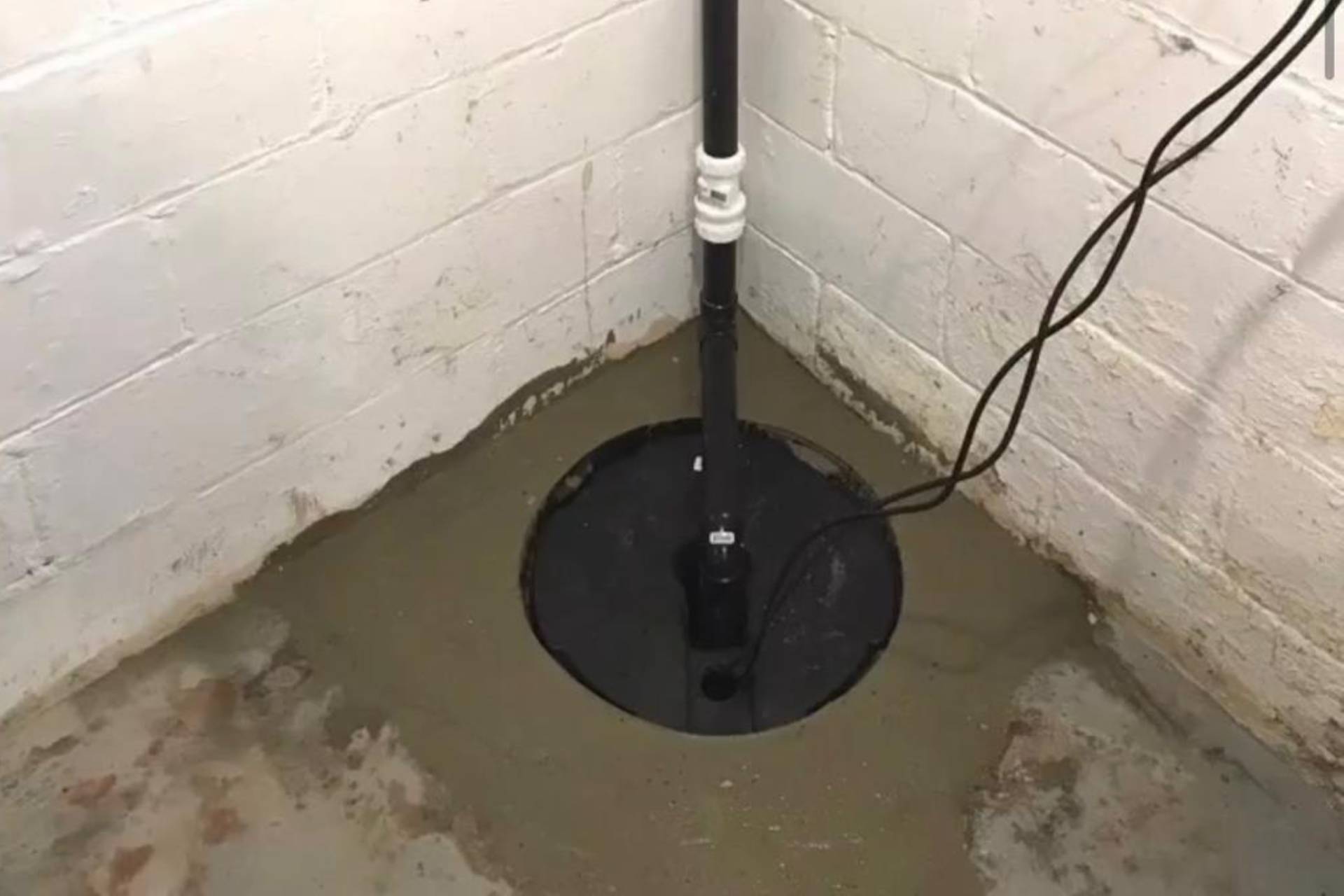
Concrete block. It leaks at the mortar joints, cracks in a stair-step pattern at the corners, and holds water in its hollow cores until it weeps out at the floor line. Interior drain tile to a sump is the standard fix, and it works well in these houses.
The newer houses
Poured walls, sometimes a townhouse with a shared foundation. Leaks are usually a single crack, a pipe penetration, or water pooling against a wall where the grading has settled. Smaller jobs, mostly. If you’re in a townhouse, find out what the association covers before the estimate, since the foundation and the grading may not be yours to fix.
The lake goes up and down
Walled Lake doesn’t sit at one level. In 2025 residents were raising concerns about low water and erosion near the dam on the southwest corner, and in wet years it runs high. If your house is close to the shore, the groundwater under your floor rises and falls with the lake. A basement that stayed dry through a dry year isn’t proof the problem is gone. Keep the sump plugged in and test it every spring by pouring a bucket of water into the pit.
Floor drains that back up in heavy rain are a separate thing, and usually a sewer thing. In the older houses here the line out to the street is often clay or cast iron with roots in it. A camera shows us, and hydrojetting clears roots without digging.
We’re in Shelby Township, about 45 minutes away. That’s toward the edge of our area, but we come out, day or night, and the estimate costs you nothing. If what you need is a gutter cleaned and a downspout pointed away from the house, we’ll say that and save you the money.