Sterling Heights basements sit on farm fields that were drained in a hurry
Until the 1950s this was Sterling Township, mostly farmland, and a surprising amount of it was rhubarb headed for Detroit markets. Then the auto plants landed on Van Dyke and Mound, and the subdivisions came right behind them. The population went from about 14,600 in 1960 to more than 61,000 in 1970. The city’s own history page puts it bluntly. The township “stumbled into massive flooding due to the lack of drainage systems,” made worse in places by a major drain running in from Troy.
That’s the backdrop for nearly every wet basement we look at here. The houses went up fast on flat lake-plain clay, sewers and storm drains were playing catch-up, and the grading on a lot of lots was set once around 1970 and never touched again.
What’s usually going on under a 1970s Sterling Heights colonial
Most of the ranches, colonials and tri-levels from the boom years sit on concrete block. Block leaks in two ways. Water pushes through the mortar joints, and it also fills the hollow cores and seeps out low on the wall, which is why you’ll often see a white crust along the bottom course long before you see standing water. Houses from the later 1970s and the 1980s are more often poured concrete, and there the usual culprits are tie-rod holes and a diagonal crack running off a window corner.
The clay is the other half of it. After a storm it holds water right against the wall for days. In a dry August it shrinks and pulls away, and the gap fills with the next rain. Add a few freeze and thaw cycles and the wall gets worked on from every direction.
The river, the county drains, and August 2014
The Clinton River crosses the northeast part of the city on its way to Mount Clemens and Lake St. Clair. Houses up near Dodge Park and along the river corridor sit closer to the water table than the subdivisions near 14 Mile, and those are the basements where we push harder on pump capacity and a reliable backup. Everywhere else, rain leaves through a web of county drains, the Plumbrook Drain among them, that nobody thinks about until one backs up.
In the August 2014 storm, the same rain that buried Warren flooded Sterling Heights city offices and the police department. We don’t have a count of houses, and we won’t make one up. What we can tell you is that most of the basement damage from that storm, here and across south Macomb, came up through floor drains from overloaded sewers, not through the walls.
What we’d fix first, and what we’d leave alone
We don’t lead with a full perimeter system. Walk around the outside first. If the downspouts empty right next to the foundation and the dirt slopes toward the house, deal with that. It’s cheap compared to anything we’d do inside, and once in a while it’s the whole problem. If that’s all it is, you don’t need us. You need a weekend and a few downspout extensions.
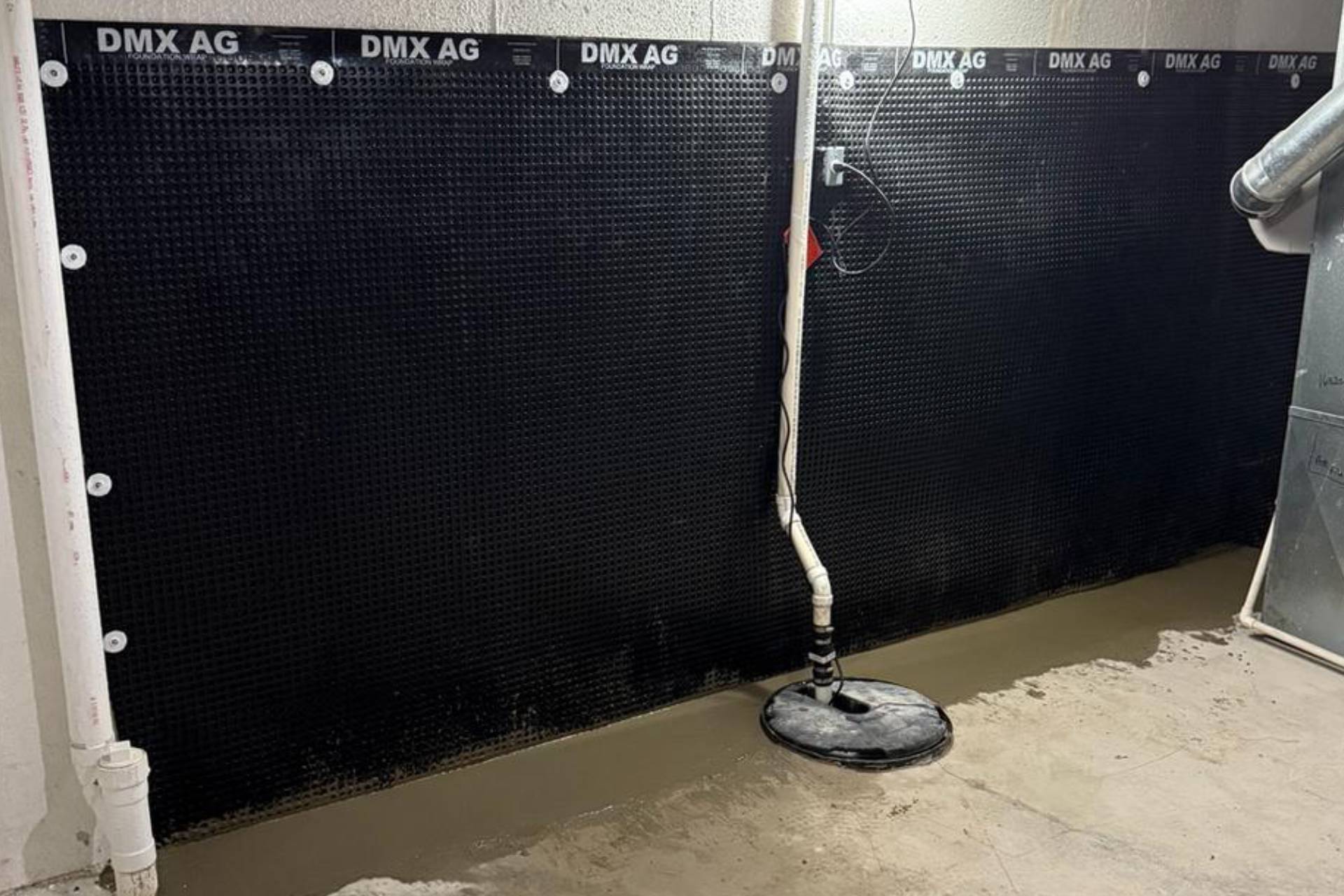
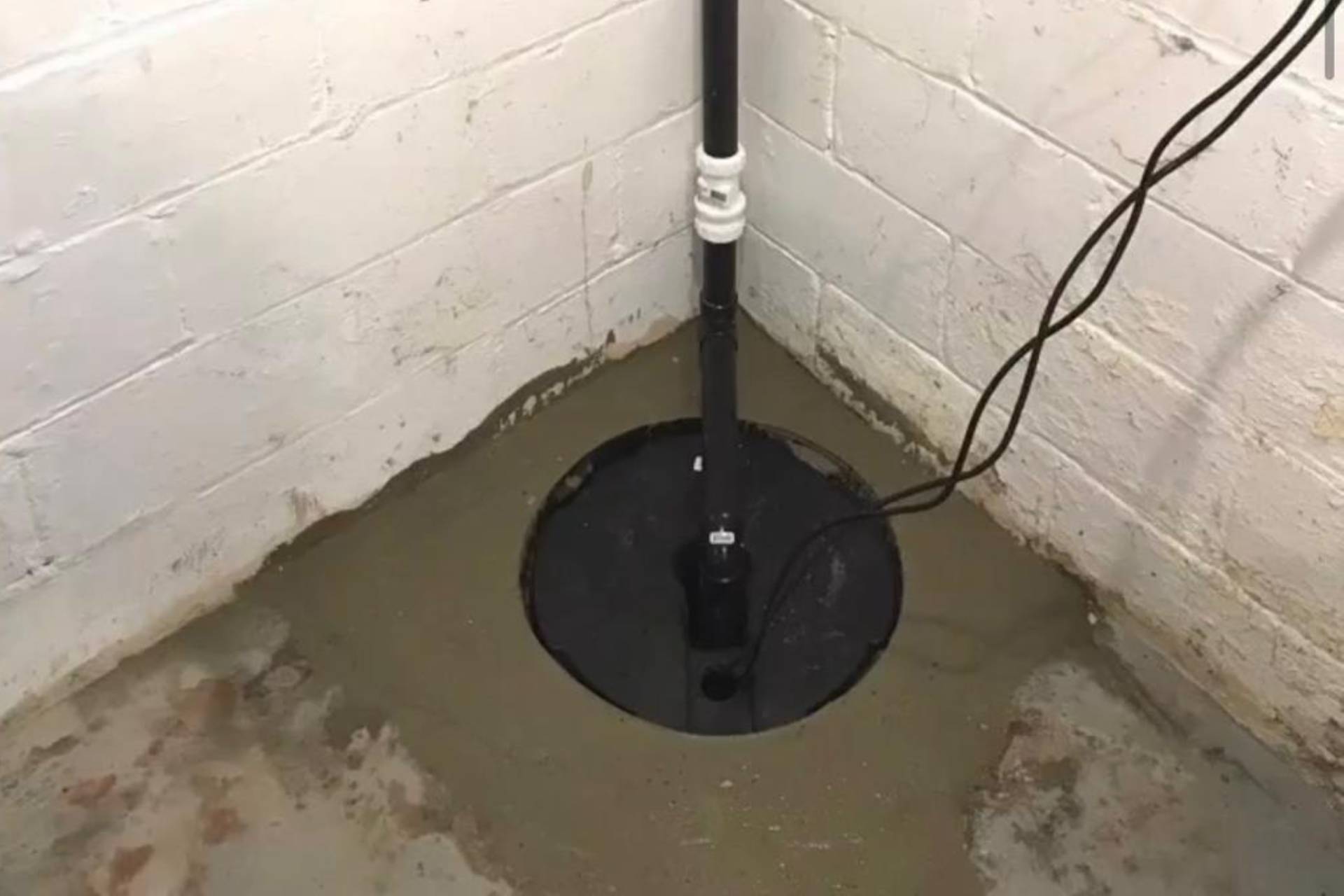
If water still gets in after the outside is sorted, on a block house in this clay we usually recommend interior drain tile running to a new sump, plus a battery or water-powered backup pump. The storms that fill your pit are the same storms that knock the power out, so a pump with no backup is only half a system. A basement that took sewage in 2014 or 2021 needs a backwater valve on the main line, and no amount of wall work will stop that kind of water.
And sometimes a crack is just a crack. A dry hairline in a poured wall from 1985 can be injected in an afternoon and forgotten about. We’ll tell you when that’s the case.