Basements in Royal Oak start at the 12 Mile line
Ask anyone who’s lived here through a few bad summers and they’ll tell you which side of town floods worse. The city’s stormwater task force put it in writing in 2018. South of 12 Mile the soil is mostly sand. North of 12 Mile it’s mostly clay. That one line shapes most of what we find.
In the sandy blocks below 12 Mile, water moves through the ground fast and doesn’t lean on the wall for long. The trouble there usually comes up rather than in, through an old clay lateral or a floor drain that happens to be the lowest point in the house when the combined sewer fills. North of 12 Mile the clay holds rain like a sponge and presses on block and clay-tile walls for days after a storm, so you get wall seepage and cove-joint leaks on top of the backup risk.
You’re near the bottom of the pipe
Royal Oak is one of 14 south Oakland communities in the George W. Kuhn drainage district, the old Twelve Towns Drain, and the city sits toward the downstream end. Water from the towns upstream is already in the pipe by the time yours gets there. The city has said plainly that it can’t send unlimited water into the Kuhn drain, which limits what it can do with its own sewers.
After two record storms on back-to-back days in 1991, Royal Oak started fitting street catch basins with restricted lids so the streets hold water and the pipes get a head start. Thousands have been done. That’s why your street turns into a pond. It’s deliberate.
It still wasn’t enough on August 11, 2014. Around five inches fell in a few hours and roughly 40 percent of homes in the city had basement flooding. Vinsetta Boulevard was on the evening news. Afterward the city picked up nearly 6,500 tons of soaked carpet, furniture and drywall from the curbs.
What we usually find in a 1920s to 1950s Royal Oak house
Most of the housing went up between the 1920s and the early 1950s. The Golf Homes subdivision houses in the L.A. Young district were built from 1922 to 1925, mostly Colonial Revival, and they’re a fair picture of the older stock. Clay-tile or early block walls. Clay drain tile around the footing that stopped carrying water a long time ago. A clay sewer lateral with roots in the joints.
Some houses around town are mail-order kits (a 1926 Sears Gladstone on Maxwell Avenue is a documented one), and kits shipped without a foundation. Whoever was laying block locally that year built the basement, so quality is all over the place. The postwar ranches and Cape Cods farther north are more often on eight-inch block, which leaks at the mortar joints and lets water collect in the hollow cores.
The order we’d fix things in
We’d rather spend your money where the water is actually getting in, so we usually work through it like this.
- A sewer camera down the lateral first. Roots and offset joints cause a lot of so-called flooding that’s really a slow drain backing up.
- A backwater valve if the floor drain is how water got in. In a combined-sewer town it’s often the most useful single thing you can buy.
- Downspouts and grading. If the yard pitches toward the house, fix that first. Sometimes you need a landscaper more than you need us.
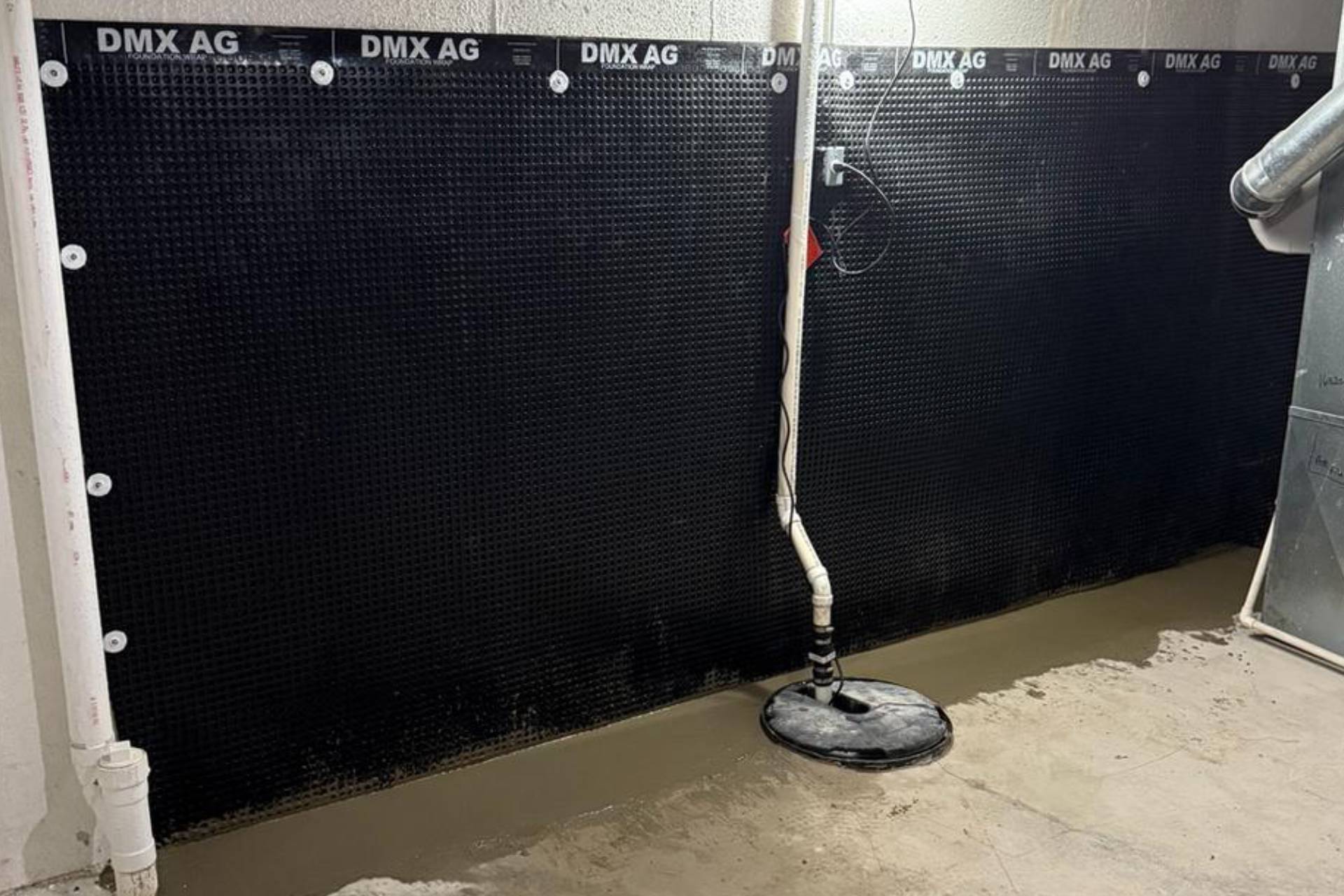
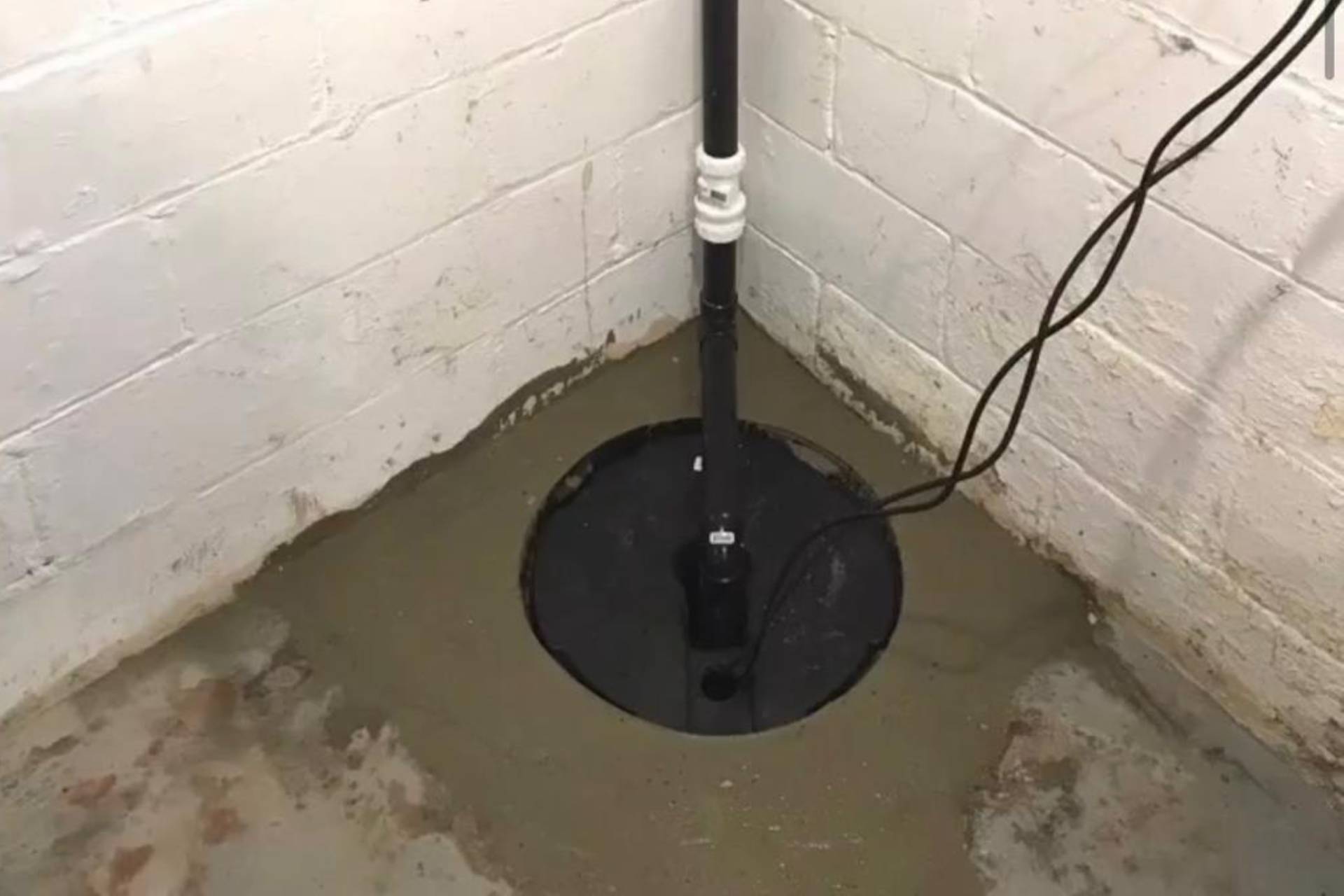
- Interior drain tile and a sump with a battery or water-powered backup when the walls or the floor joint leak, which is common in the clay north of 12 Mile.
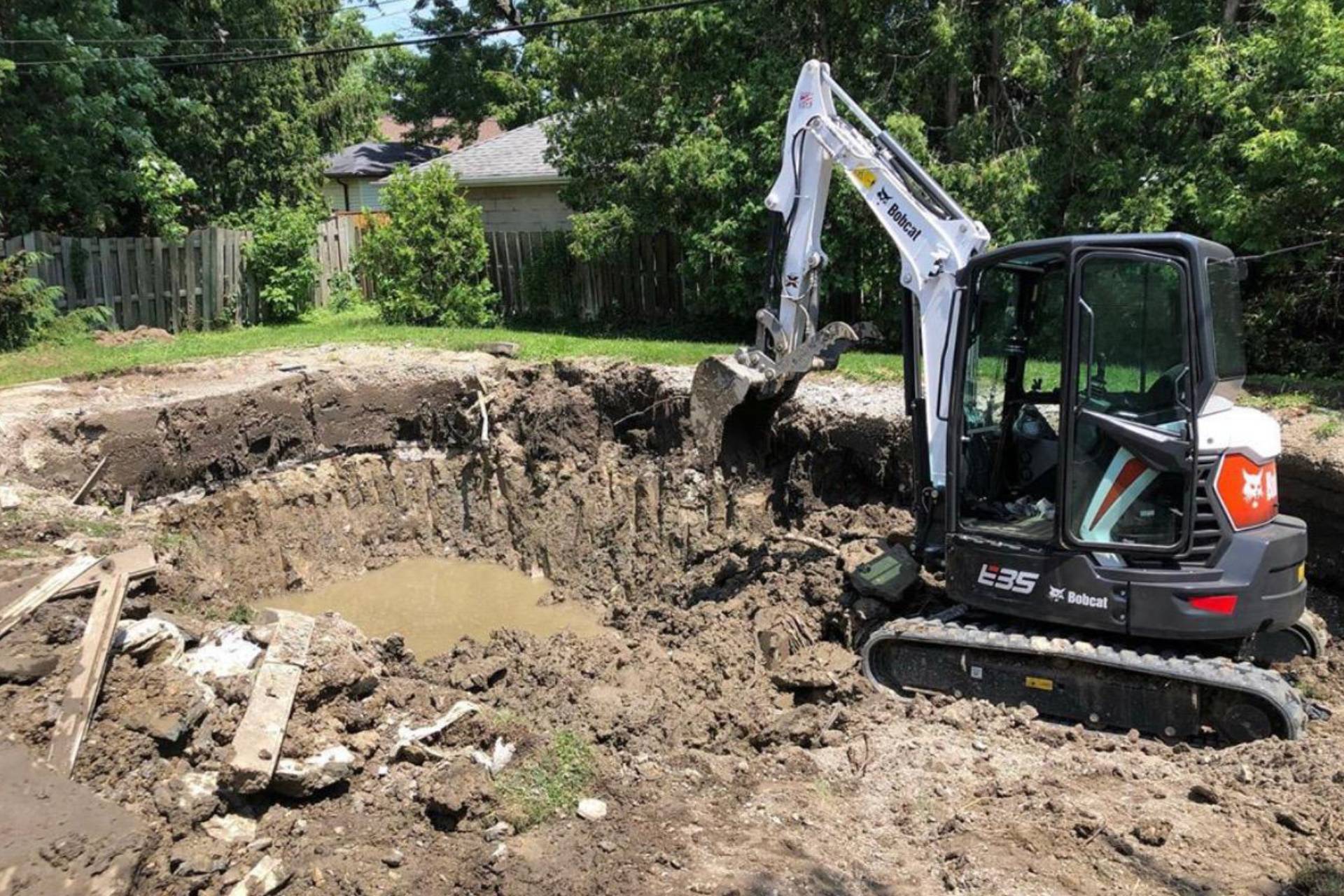
Exterior excavation makes sense on some Royal Oak lots. But the side yards between bungalows are often six or eight feet wide with the neighbor’s driveway right there, so digging is slow, and we’ll tell you up front when working from inside gets you the same result.
About that crack in the floor
A dry hairline crack in a basement slab is just a crack. Leave it alone. If it’s wet after rain, or it runs up into the wall, it’s worth a look, and crack injection is often enough on its own.