Keego Harbor basements start with the cottages
Keego Harbor is a city of about 2,800 people on roughly half a square mile, and nearly all of it is a short walk from water. Cass Lake runs along the west side, Sylvan Lake wraps around the east, and little Dollar Lake sits in the middle, tied to Cass by the canal Joseph Sawyer dredged around 1912 when he decided Dollar Lake would be his harbor. He took the name Keego from Longfellow and sold lots for homes and cottages. The trolley had been bringing Pontiac and Detroit people out to Cass Lake since 1895.
Plenty of those cottages are still here, buried inside the houses people live in year-round. The 2020 census counted fewer than 1,500 housing units in the whole city, and a good share of them sit on lots around 40 feet wide.
What’s under a converted lake cottage
A summer cottage didn’t need a basement. Many were set on piers or a short block wall over a crawl space, some with a dirt floor. When owners winterized them they added furnaces, insulation and rooms, and some dug a basement under an addition. So an older Keego house might have a crawl space under the front, block walls under the back, and a slab under a porch someone enclosed in the 1970s.
Water finds the seams. Where an old foundation meets a newer one there’s almost never a real waterproofing detail, and the joint moves a little every winter. When someone here tells us the basement leaks in one corner, that’s usually the corner.
Crawl spaces
Most crawl space trouble here is damp air, not standing water. Wet dirt under the floor keeps the space humid all summer, the joists stay damp, and the whole house smells like it. A sealed vapor barrier fixes most of that. If water actually pools after a storm, we put in a small perimeter drain and a sump. Before you call, find the access hatch. In some of these houses it’s under a closet floor.
Small lots change how we work
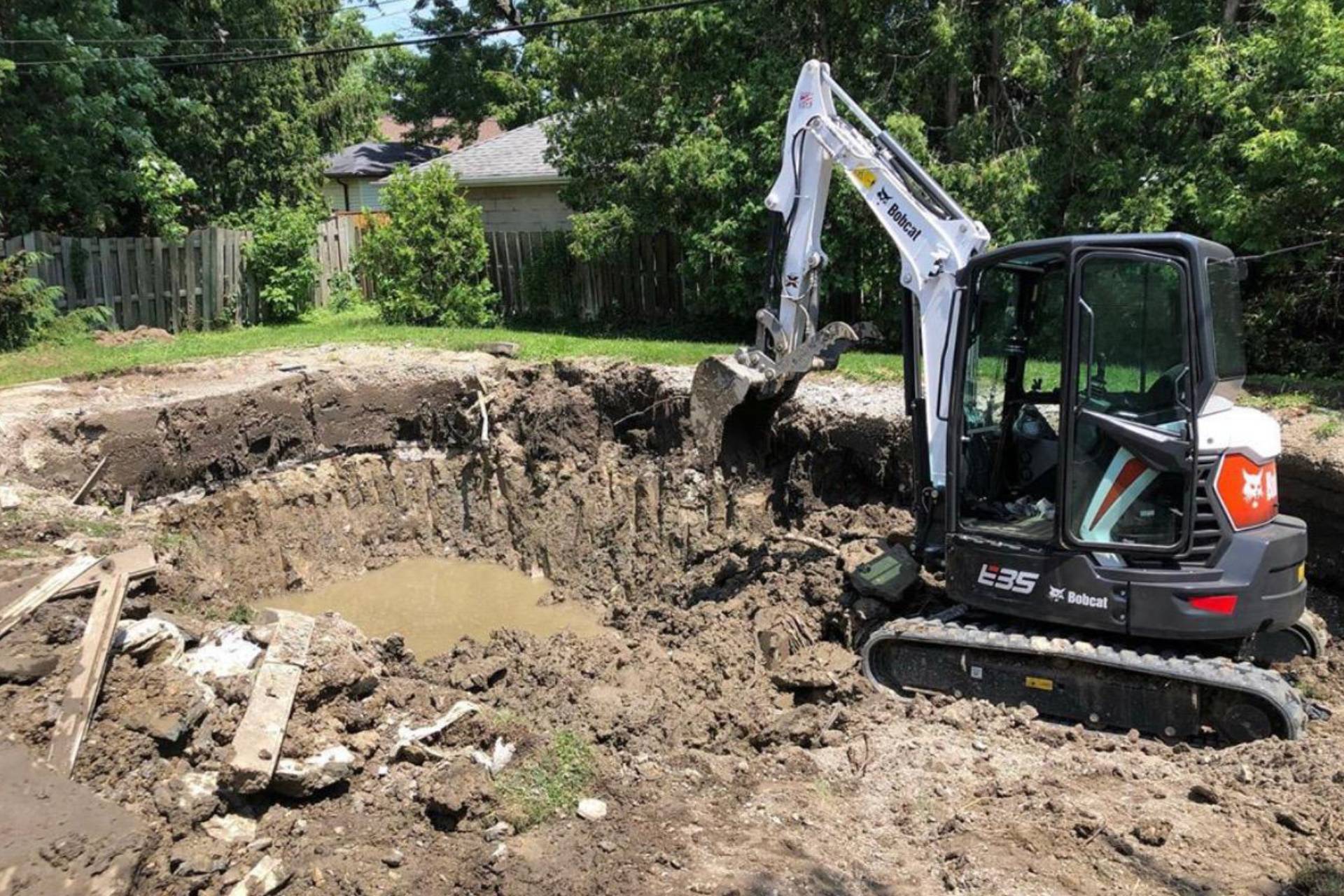
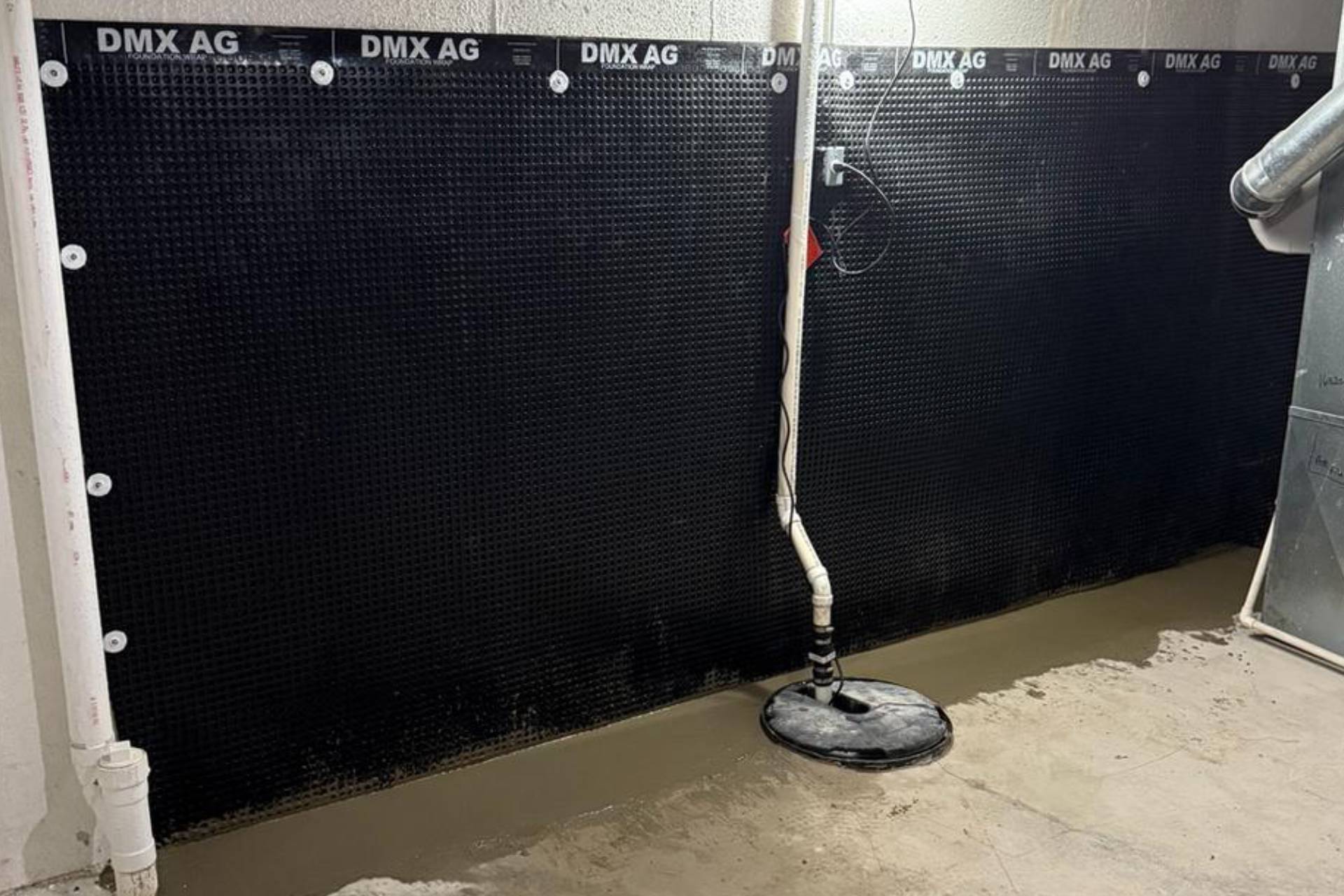
A 40-by-100 lot with a house on it leaves very little room for a machine. We can’t always excavate the outside of a foundation here, and on the lake side we don’t want to push dirt toward the water anyway. That’s why a lot of Keego work happens from the inside, with interior drain tile running to a sump that discharges well away from the house. When we can dig, it’s often one wall at a time, partly by hand.
Talk to your neighbor before we show up. On these streets our crew may need to walk equipment along a shared side yard for a day or two.
The lake level and your floor
Cass Lake is held at a legal level that runs a bit over a foot higher in summer than in winter. Near the shore, groundwater rises and falls with it. So a lakeside basement in Keego can stay dry through the March thaw and start seeping in June, which confuses people who expect leaks to follow rain. It isn’t mysterious. The water table came up under the slab.
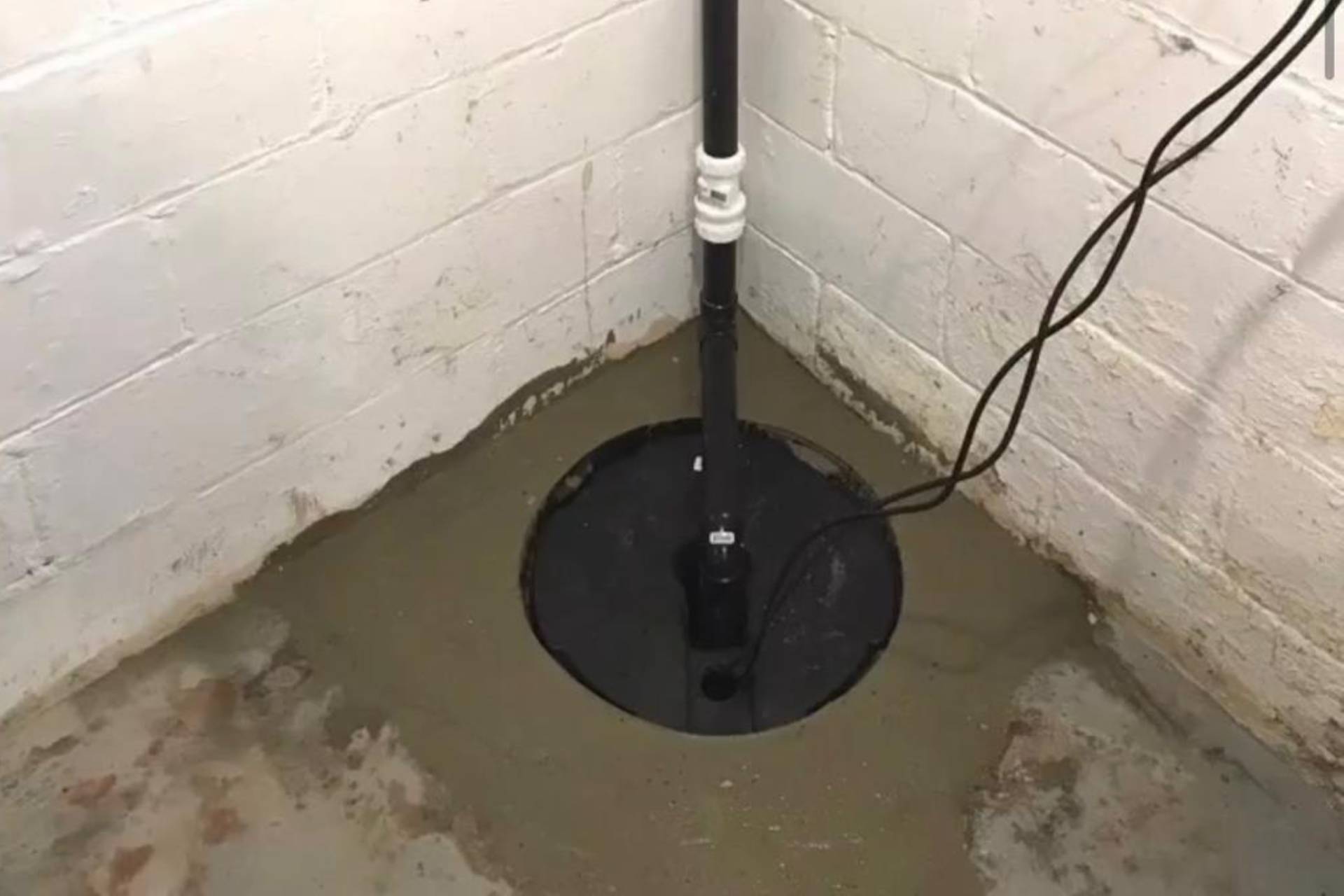
For those houses we’d put in a sump with real capacity and a battery backup pump, because the summer storm that knocks out the power is the same one pushing water toward your floor.
Getting to you
We come from Shelby Township, about 35 to 40 minutes across M-59. Estimates are free. If it turns out the problem is a downspout aimed at the foundation, we’ll tell you that and leave.