Huntington Woods basements, street by street
Huntington Woods is small enough to walk across in twenty minutes. It runs from 11 Mile down to I-696 and from Coolidge over to Woodward, and the Detroit-owned Rackham Golf Course, opened as the first 18-hole public course in Michigan, takes up about a fifth of it. The western end of the Detroit Zoo is inside city limits too. That leaves roughly 2,400 homes, and they share a lot of history.
The village incorporated in 1926 and became a city in 1932, but in 1930 only about 650 people lived here. The real building came later. By 1960 the population was close to 8,750. So while the curving streets were laid out early (I.C. Freud patterned them on Huntingdon, England, and plenty of the first houses lean English in style), most of the basements were dug from the late 1930s through the 1950s.
Mostly block, some older, all of it on clay
That timing tells us a lot before we open the basement door. Postwar houses on streets like Borgman and Nadine are typically on concrete block. Block leaks at the mortar joints, and water collects in the hollow cores and works its way out at the bottom course, so the first sign is usually a damp strip along the cove joint. The older houses can be on clay tile or early poured walls, which is a different conversation.
A lot of these basements were finished in the ’60s and ’70s with paneling and a drop ceiling, which hides the block. If a paneled room smells musty, the wall behind it is probably damp even if you’ve never seen a puddle. We check with a moisture meter and a thermal camera before anyone pulls a panel.
All of it sits on the heavy clay that runs through south Oakland. Clay holds rain against the walls and moves with the seasons, fat and wet in April, shrunken and cracked by late August.
The trees are part of the problem
People move here for the canopy, and it really is one of the best in the county. Those same trees are the main reason we get calls in Huntington Woods. Seventy-year-old roots find every joint in a clay sewer lateral. A slow drain becomes a backup the first time a storm surcharges the main, and from the basement you can’t tell which one caused it.
We start with a camera. If the lateral is sound but full of roots, hydrojetting clears it better than a cable. If it’s cracked or the joints have pulled apart, cleaning just buys time and sewer repair is the honest answer.
When the whole district backs up
Huntington Woods drains to the George W. Kuhn basin in Madison Heights along with 13 other south Oakland communities, through sewers that carry rain and sewage together. On August 11, 2014, TV crews found Huntington Woods blocks where almost every house had flood damage and the curbs were piled with wet furniture. Restoration companies were so swamped that cleanup dragged on for weeks.
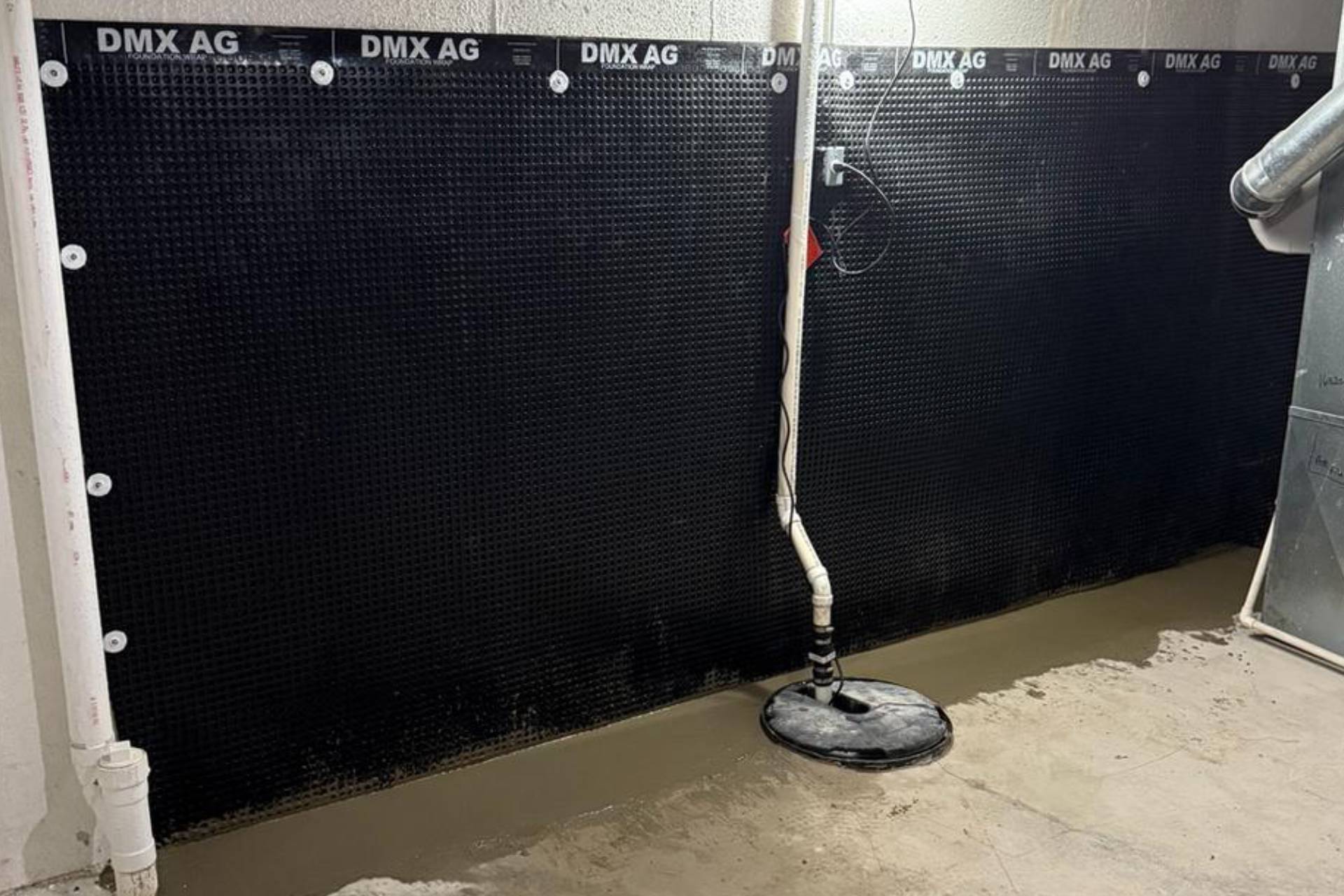
No single house can fix a regional system. What you can do is stop sewer water from coming up your floor drain with a backwater valve, and keep groundwater off the floor with drain tile and a sump that has a backup pump behind it. Running your downspouts into the yard instead of the sewer helps the whole block, a little, every time it rains.