Harrison Township is lower than most of Macomb, and it shows
Harrison Township is wedged between the Clinton River and Lake St. Clair. The river ends here, Selfridge Air National Guard Base sits along its north bank, and Lake St. Clair Metropark, which everybody over 40 still calls Metro Beach, takes up a big stretch of the shore. In between are canals, marinas, cottages that became year-round homes, and subdivisions built on ground that’s only a few feet above the lake.
That last part drives almost everything we do here.
High water is a recent memory
In 2019 the lake climbed to a level the township supervisor said he hadn’t seen in 30 years. The township bought more than 150,000 sandbags and 1,200 tons of sand in about two weeks, and on some canal streets water was creeping up to front doors. The following spring Lake St. Clair set an all-time high. Some canal owners stopped sandbagging and raised their seawalls instead.
We bring this up because it sets expectations. A basement or crawl space system can keep groundwater out and handle a sewer backup. It cannot hold back the lake when the lake is standing in your yard. If that’s your situation, you need a seawall contractor and maybe an engineer, and we’ll say so before we sell you anything.
Not every house has a basement
This is one of the places in our service area where we see a lot of slab and crawl-space houses. Older lake cottages were often built on piers or shallow foundations and finished off over the years. Where the water table sits that close to the surface, a lot of builders simply skipped the full basement.
Crawl spaces here tend to stay damp. You’ll smell it in the house before you see it. What helps is a heavy vapor barrier over the dirt, a small drain and sump at the low point, and, most important, getting surface water to stop running toward the house in the first place. Downspouts that dump next to the foundation and yards that slope the wrong way cause more crawl-space problems here than anything underground. Sometimes a good drainage fix outside is the whole job.
The basements that do exist
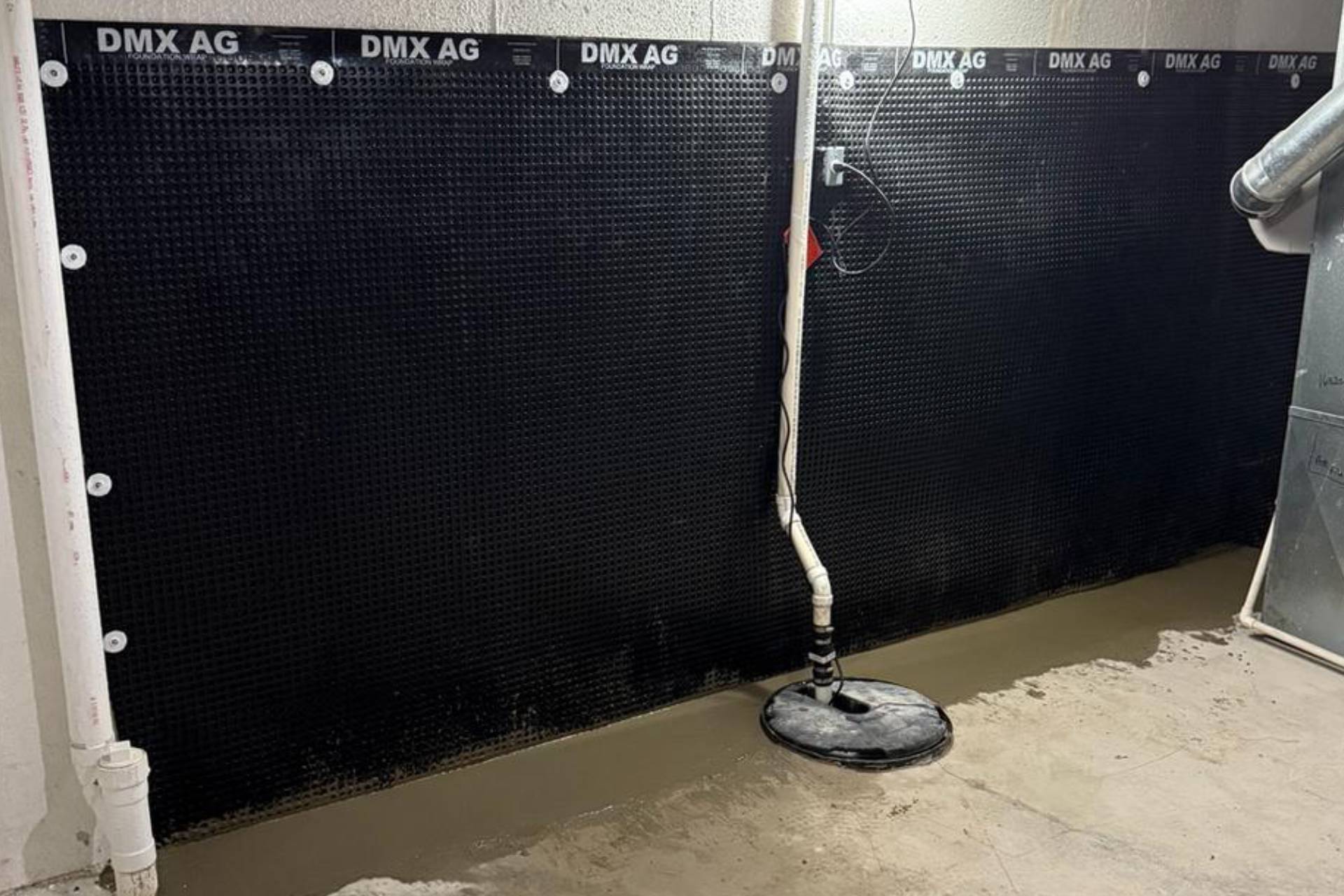
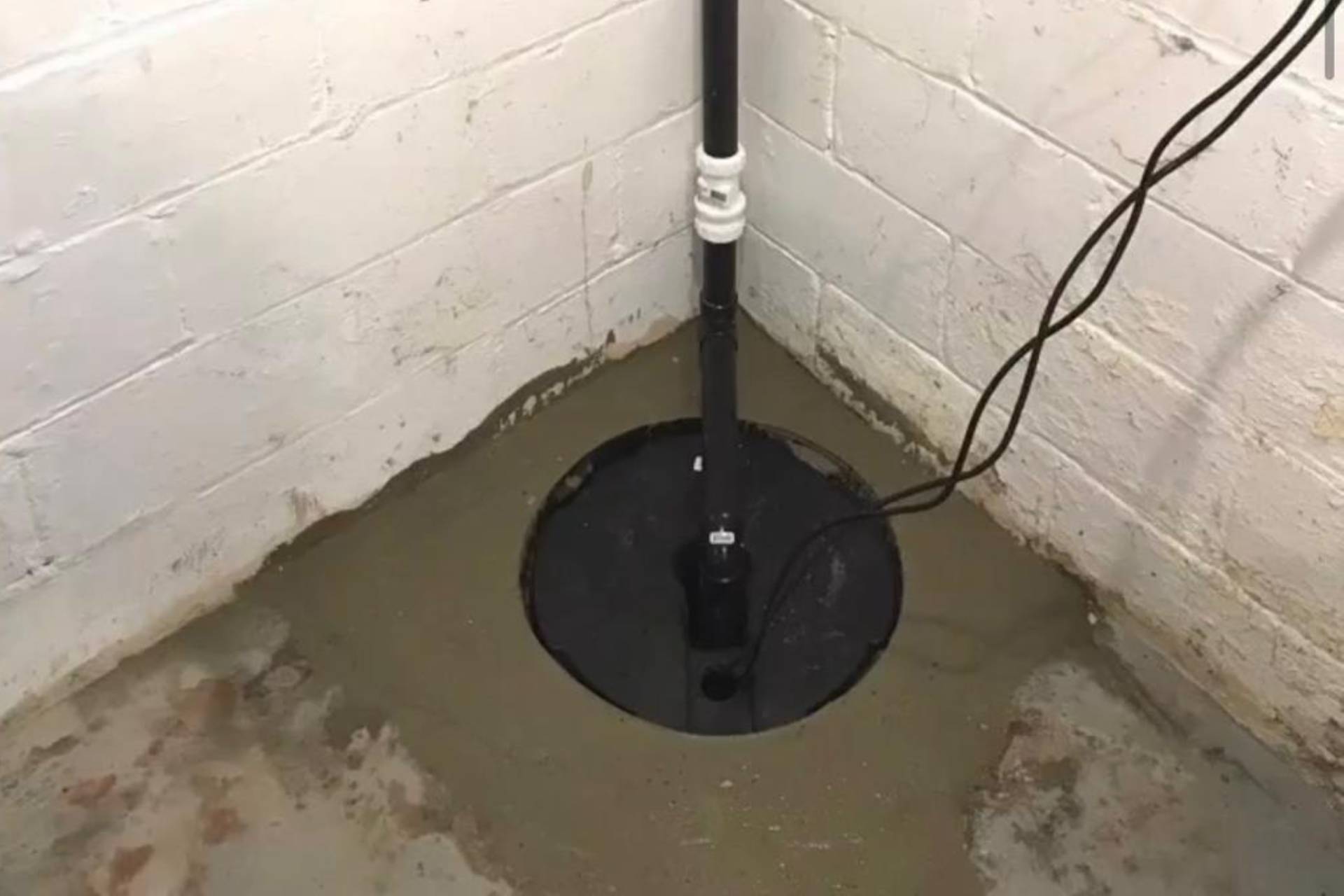
Farther back from the water, especially in the subdivisions off the main roads, plenty of homes have full basements. They’re sitting in wet lake-plain clay with a water table that rises and falls with the lake and the river. Sumps in this township run more hours than almost anywhere we work. We’d want to see a pump that’s in good shape, a check valve that holds, a discharge line that carries water well away from the house, and a backup pump that doesn’t need the power to stay on.
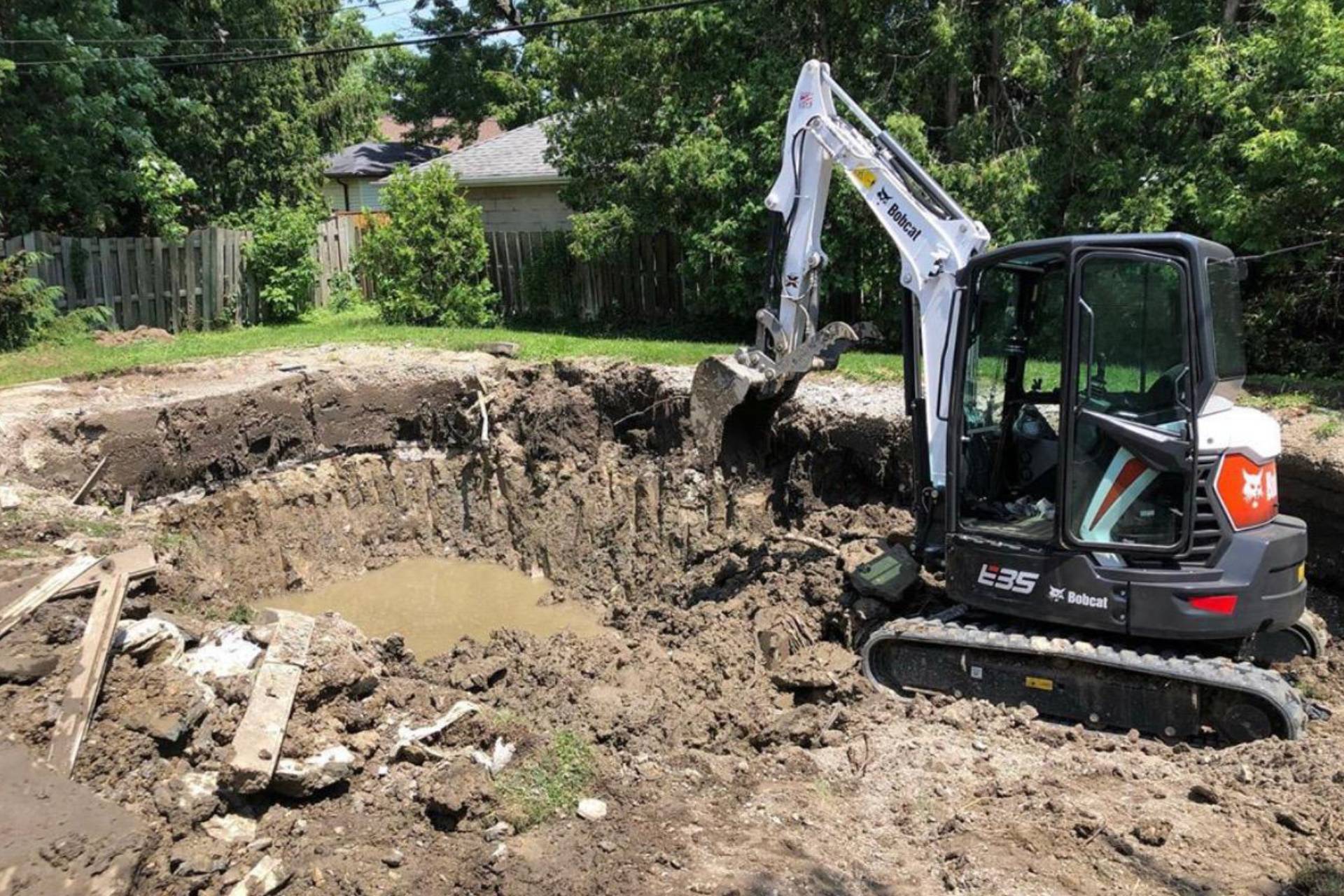
If the walls seep, an interior drain along the footing to that sump is usually the right fix. Exterior excavation can work too, but on ground this wet, the hole fills with water while you’re digging, and that changes the cost and the timeline.
The river side
Near the Clinton River and the spillway, which the Army Corps dug in 1950 to carry floodwater straight to the lake and keep it out of Mount Clemens, the ground stays saturated longer after storms. Homes along North River Road and the streets near the spillway path see the water table rise when the river runs high. A sump pump with a battery backup is close to mandatory there.