Grosse Pointe Woods is a block-basement town
The Woods started out in 1927 as the Village of Lochmoor, took its current name in 1939, and became a city in 1950. Most of what stands there today went up in a hurry around that last date. Wartime builders put up French colonials on Lochmoor Boulevard in the early 1940s, and after the war the brick colonials and early ranches filled in the grid on both sides of Mack.
That timing tells us a lot before we walk in. A Woods house from 1945 to 1955 almost always has a concrete block foundation, sitting on the flat, heavy clay of the lake plain, with clay drain tile around the footing that’s now 70-plus years old.
Where block walls let water in
Block is hollow. Water in the clay outside soaks into the cores, runs down inside the wall, and comes out at the bottom, right where the wall meets the floor. That’s why so many Woods basements show a wet line along the floor after a few days of rain, or a white mineral crust along the lower courses of block. Horizontal cracks, or a wall that leans in a little at the middle, mean the clay has been pushing for decades. That’s not a waterproofing problem anymore, and we’ll tell you if we see it.
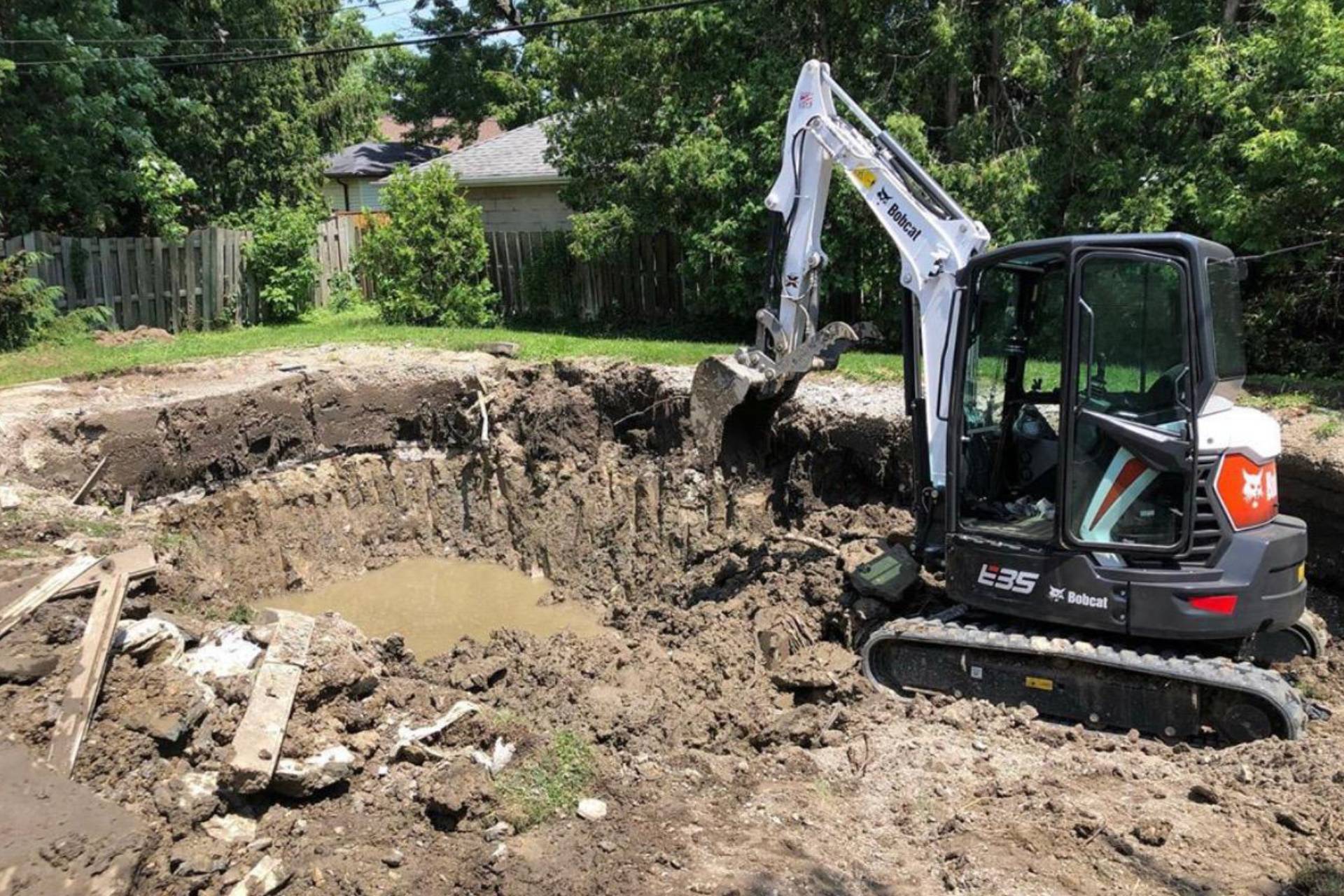
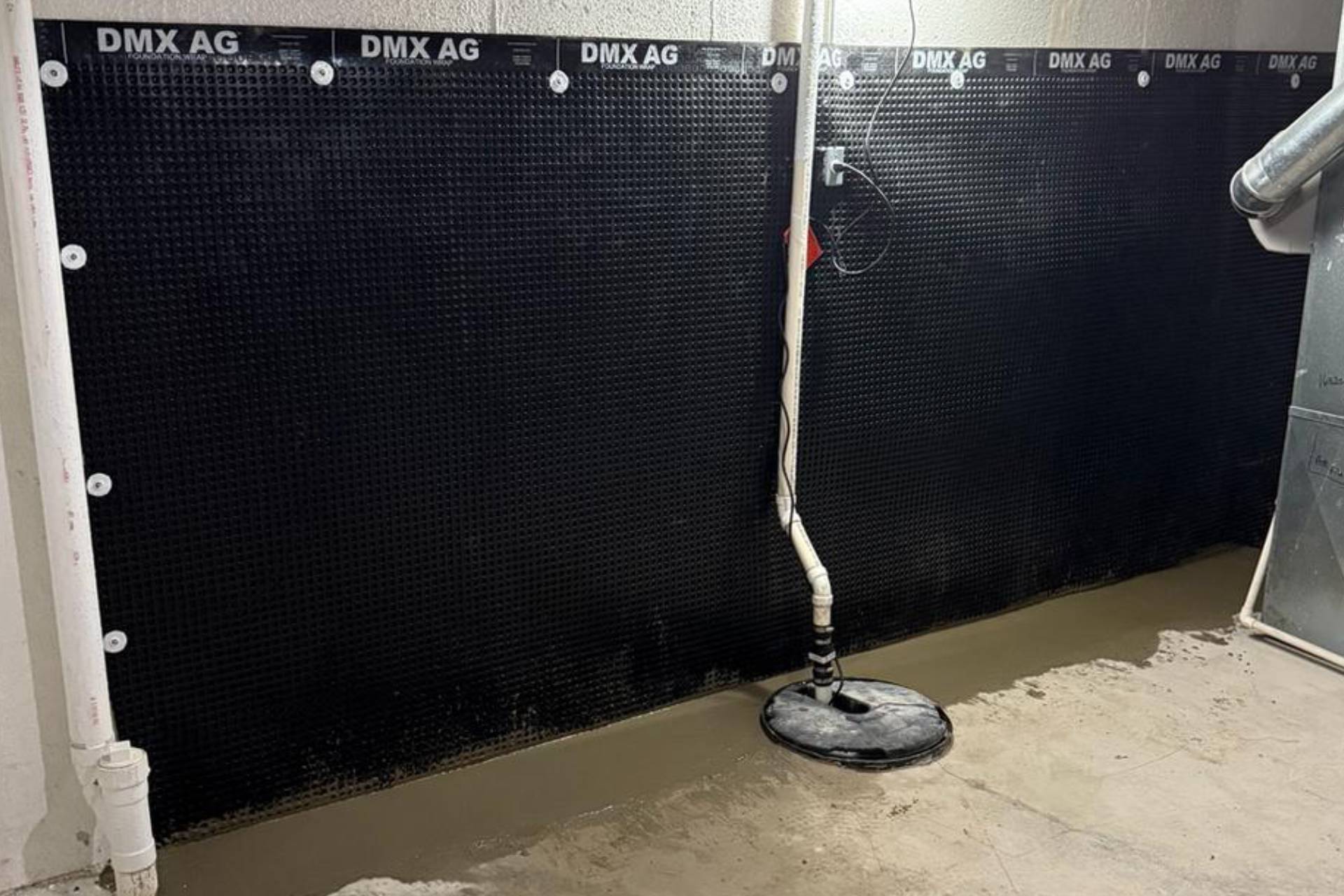
For ordinary seepage, the fix we trust most in the Woods is interior drain tile along the footing, with weep holes drilled into the bottom course of block so the cores can drain. Everything runs to a sump. It works with how block walls actually behave instead of trying to seal them shut.
The sewer side
The Woods doesn’t drain the same way as the Park or the City. Its flow heads north through the Torrey Road pump station to the Milk River retention basin and pump station, run by the Southeast Macomb Sanitary District. In June 2021 the city engineer said both ran without problems. Basements flooded anyway, then again in July, and the town hall that followed was not a friendly meeting.
We understand the frustration. When the whole regional system is overloaded, water backs up through the lowest drains no matter how well the local pumps run. The city’s own response listed sewer televising, lining and pipe-burst repairs, and it put a number on backflow valves for about 6,700 homes. That’s close to every house in town, which tells you how the city sees the risk.
Our advice lines up with that. Get your lateral looked at with a camera, fix what’s broken, and put a backwater valve on the main line.
Pumps and power
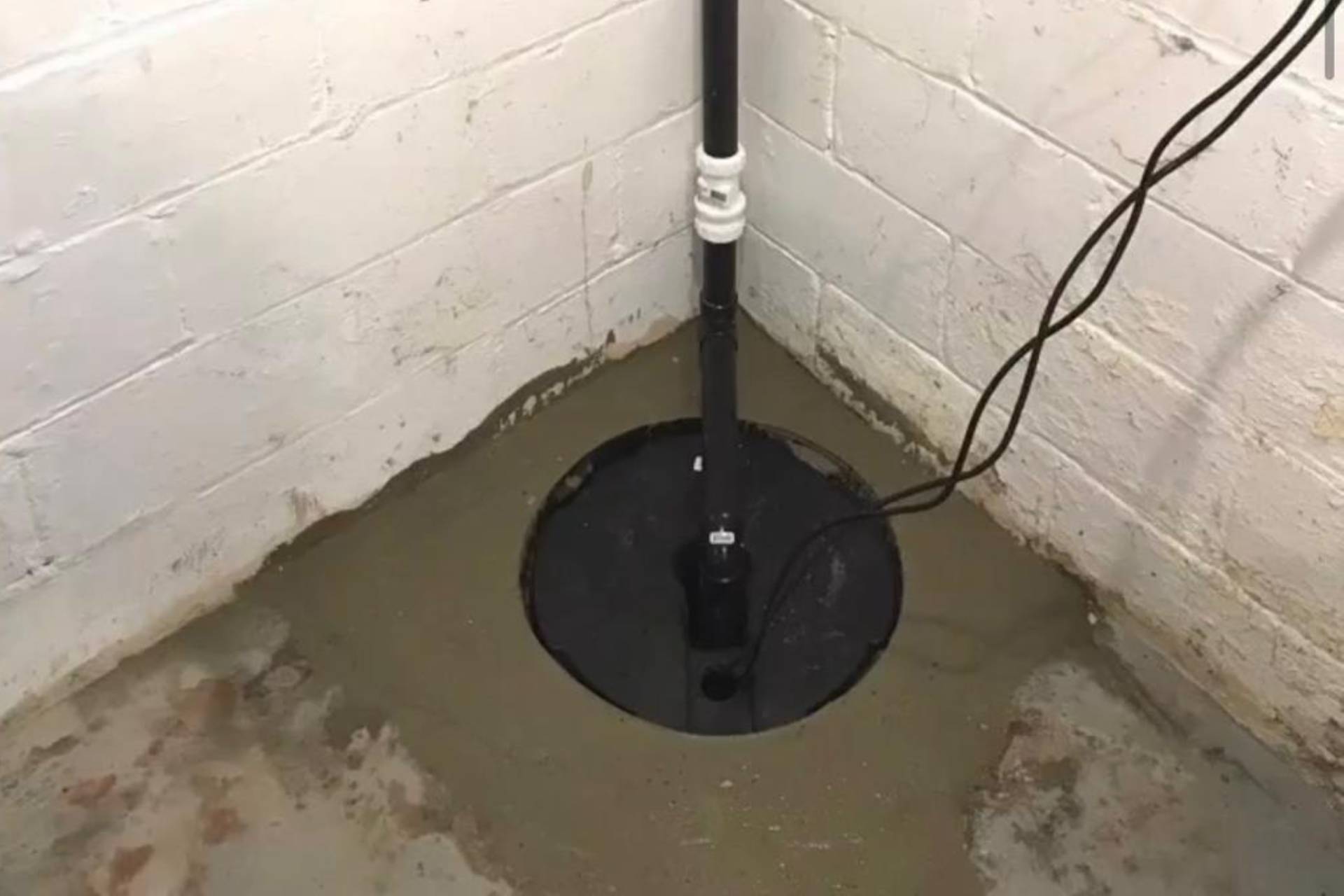
A lot of Woods basements already have a sump, often an old one in a small pit that was added after a wet spring decades ago. If the pump is older than about ten years, or it runs constantly after rain, it’s worth replacing before it quits on you. Add a battery or water-powered backup. Summer storms in the Woods tend to take out power on the same nights the pumps are needed most.
And sometimes it’s the gutters
Woods lots are modest, and the houses sit close to each other. A clogged gutter or a downspout that empties next to the foundation can soak one wall of a block basement all by itself. Before you spend anything on a drain system, walk around the house in the rain. If the water’s sheeting off the roof onto the wall, start there.