Grosse Pointe Farms has two sewer systems, and it matters which one you’re on
Ask ten Farms homeowners about the June 2021 flood and you’ll get two very different stories. Some lost everything in the basement. Some never saw a drop. A lot of that comes down to a line on the city’s sewer map.
Back in 1999 and 2000, the Farms separated storm and sanitary sewers in its Lakeside District, the part of town closer to the water. Rain goes one way, sewage goes another. The Inland District, back from the lake toward Mack, stayed on a combined system where both share one pipe. The Inland side also has no emergency release to the lake, so the pumps have to move everything. On a night when the rain gauges in the Farms were among the highest in the region, that’s a lot to ask of a pump station.
The city is now building a new storm sewer to separate the Inland District too. The route runs from Chalfonte and Moross, under the Country Club of Detroit, down Kercheval to Tonnancour Place and out to the lake. It’s a good project. It still stops at your property line.
If you’re on the Inland side
Treat the sewer as the main threat until the separation is finished and has been through a few big storms. That means a camera inspection of your lateral and a backwater valve on the main drain. The colonials and Tudors around the Hill and the side streets off Kercheval mostly date to the 1920s and 1930s, so the laterals are clay and the street trees have had a century to find the joints. We’d rather fix a root-packed joint now than have it be the reason a valve can’t seat later.
If you’re on Lake Shore Road or near it
Here it’s groundwater more than sewers. The estate homes along Lake Shore Road and the streets running down to it sit on heavy clay with the lake right there, and the water table rides up and down with Lake St. Clair. These houses tend to have deep basements, sometimes with wine rooms or full living space below grade, and the walls are under steady pressure from wet soil.
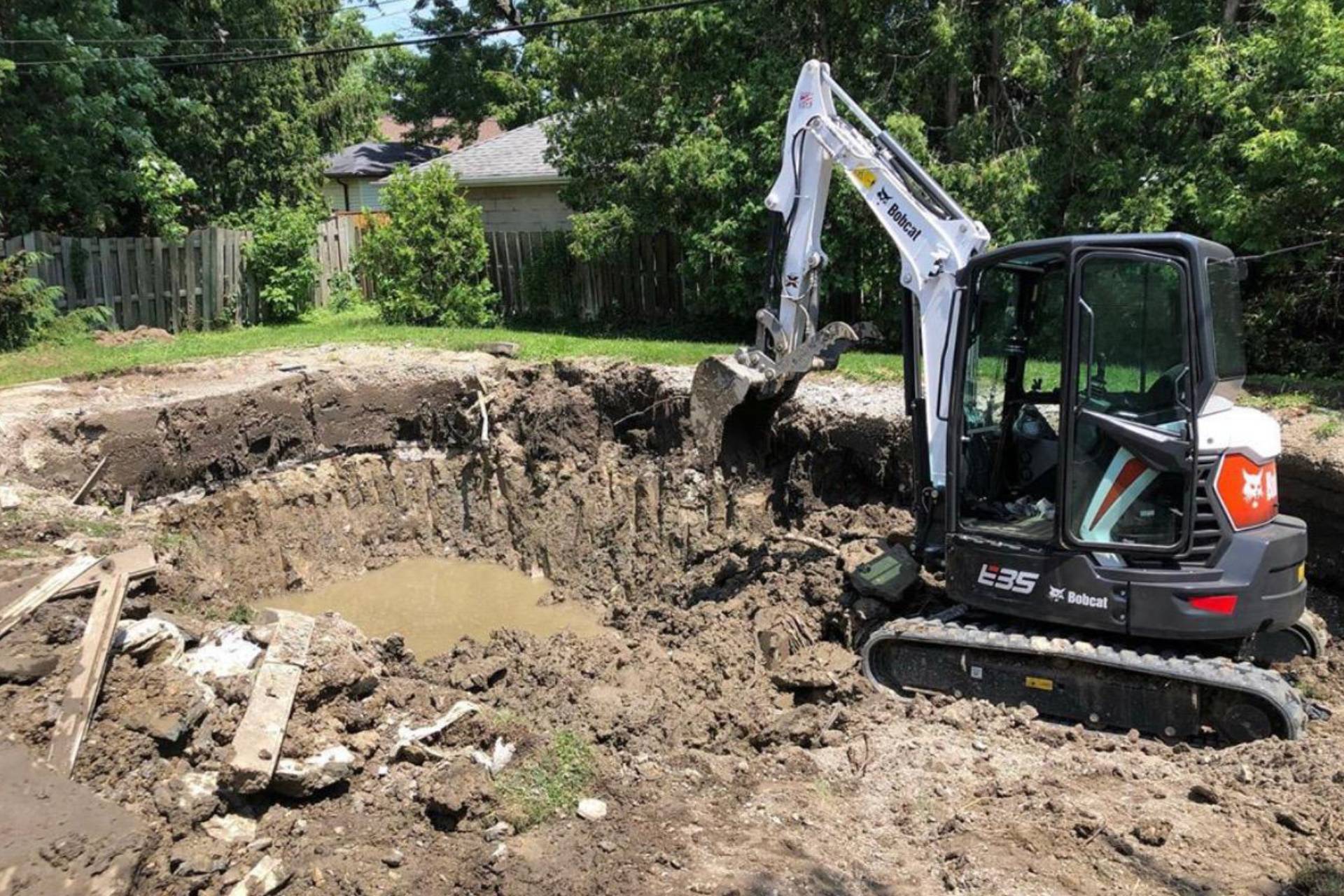
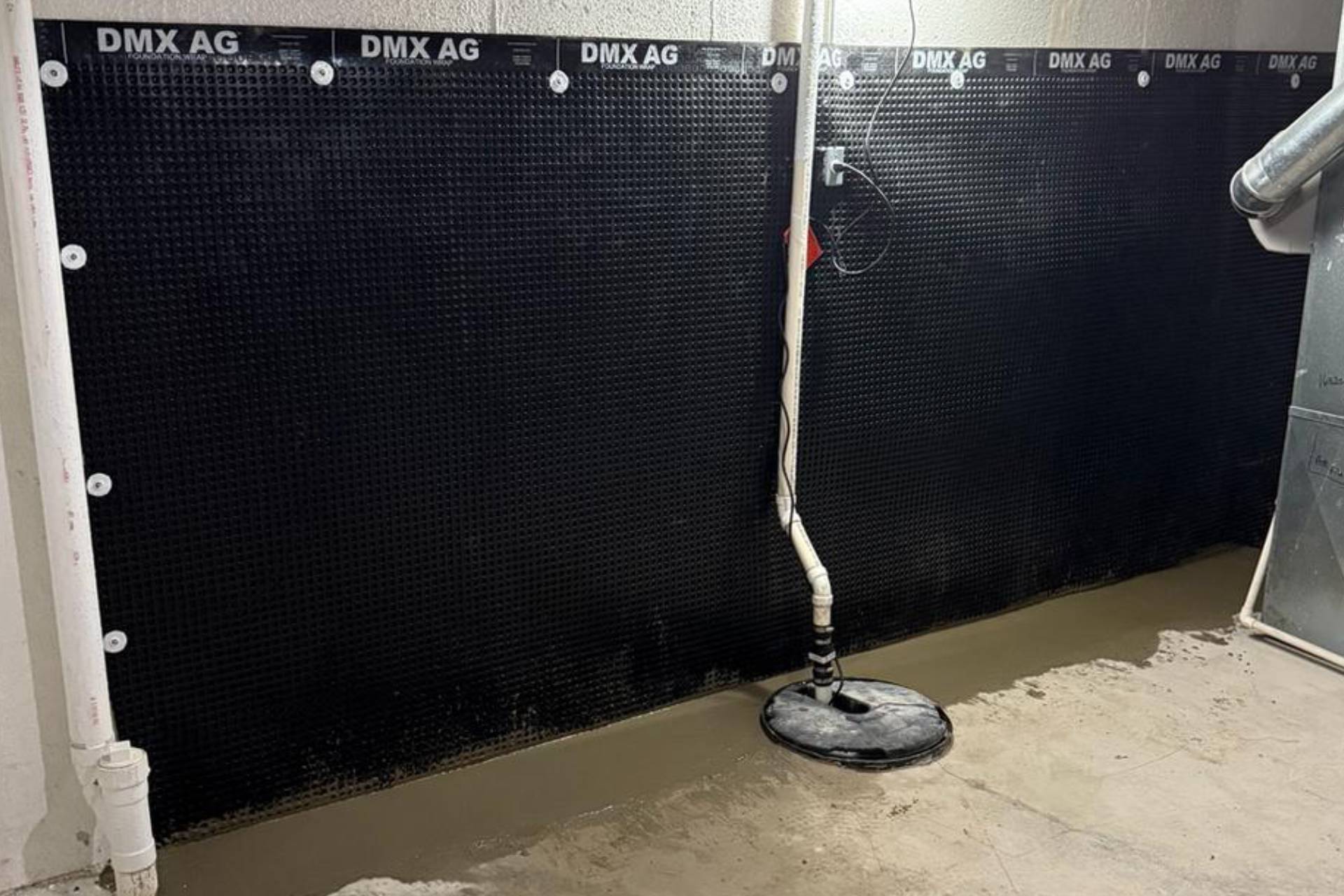
The good news is room. A lot of Farms lots are wide enough to get a small excavator along the foundation, and on a house like that we usually lean toward exterior waterproofing. Dig to the footing, clean the wall, put on a membrane, lay new footing drain in stone, and backfill properly. It’s more disruption for a few days, but it stops the water at the wall instead of managing it after it’s inside.
Interior drain tile still makes sense when there’s a porch, an addition or a heated driveway in the way. We’ll tell you which walls we can reach and which we can’t.
Pumps on the big houses
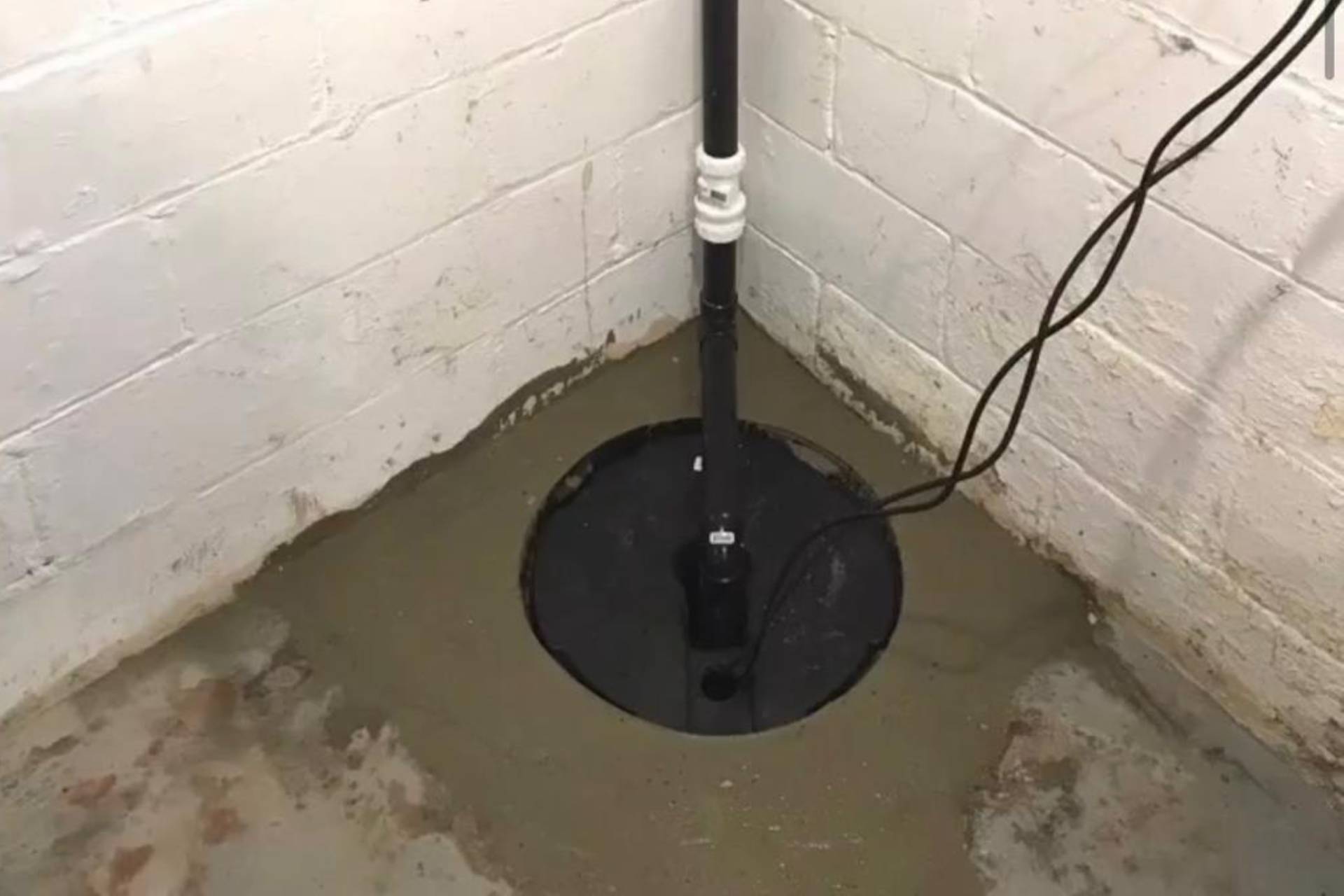
A deep basement near the lake can run its sump for days after a storm. If that pump stops during a power outage, and storms bring outages, the water comes up fast. On any house with a finished lower level we’d put in a backup pump, either battery or water-powered, and an alarm that reaches your phone. The Farms council spent time after 2021 working with DTE on power to its own pump station. Your house deserves the same thinking.
Sometimes it’s simpler than all that
Not every wet corner in the Farms is a sewer or groundwater story. A downspout dumping next to the foundation, or a patio that’s settled toward the house, can put more water against one wall than any storm. If that’s what we find, we’ll say so, and the fix may be a downspout extension and some regrading instead of a waterproofing system.