Ferndale basements and the sewers under them
Ferndale was built in a hurry. It became a village in 1918 and a city in 1927, and by 1951 most of the houses standing today were up, mostly for people working in Detroit and at the Ford plant in Highland Park. Bungalows, small colonials, a lot of story-and-a-half houses on narrow lots. Some came out of a Sears or Montgomery Ward catalog. The Ferndale Historical Society has pointed out how many kit homes are scattered around here, and a kit never included the foundation, so the basement under one is whatever the local mason built that year.
The sewers are about the same age. The city itself puts them at roughly 80 years old.
One pipe, a lot of water
Ferndale runs a combined system. Rain off your roof and your street goes into the same pipe as everything that goes down your toilet, headed for the George W. Kuhn retention and treatment basin. On a normal day that works. On July 24, 2021, nearly two inches of rain fell in under 50 minutes and the pipes ran full. The city logged everything from gurgling toilets to several inches of standing water in basements, and City Hall and the Gerry Kulick Community Center took water too.
It wasn’t the first time. After August 11, 2014, Ferndale declared a state of emergency, and at least one business owner downtown had about four feet of water in his basement.
The city has done real work since then. It cleans and lines mains every year, assesses the whole network every four years, and after 2014 it added camera equipment to find trouble before it backs up. Those steps help with everyday storms. They don’t make an 80-year-old pipe any bigger.
What we’d look at in your house
Start with the lateral, the pipe from your house out to the main. Most of them here are clay, and clay grows roots at the joints. A half-blocked lateral will back up in a storm the main handled fine, and from the basement it looks exactly like a city problem. We run a camera down it, show you the video, and go from there. Sometimes hydrojet cleaning is all it needs.
Next is the floor drain. If water came up through it, a backwater valve is usually the right call on a combined system.
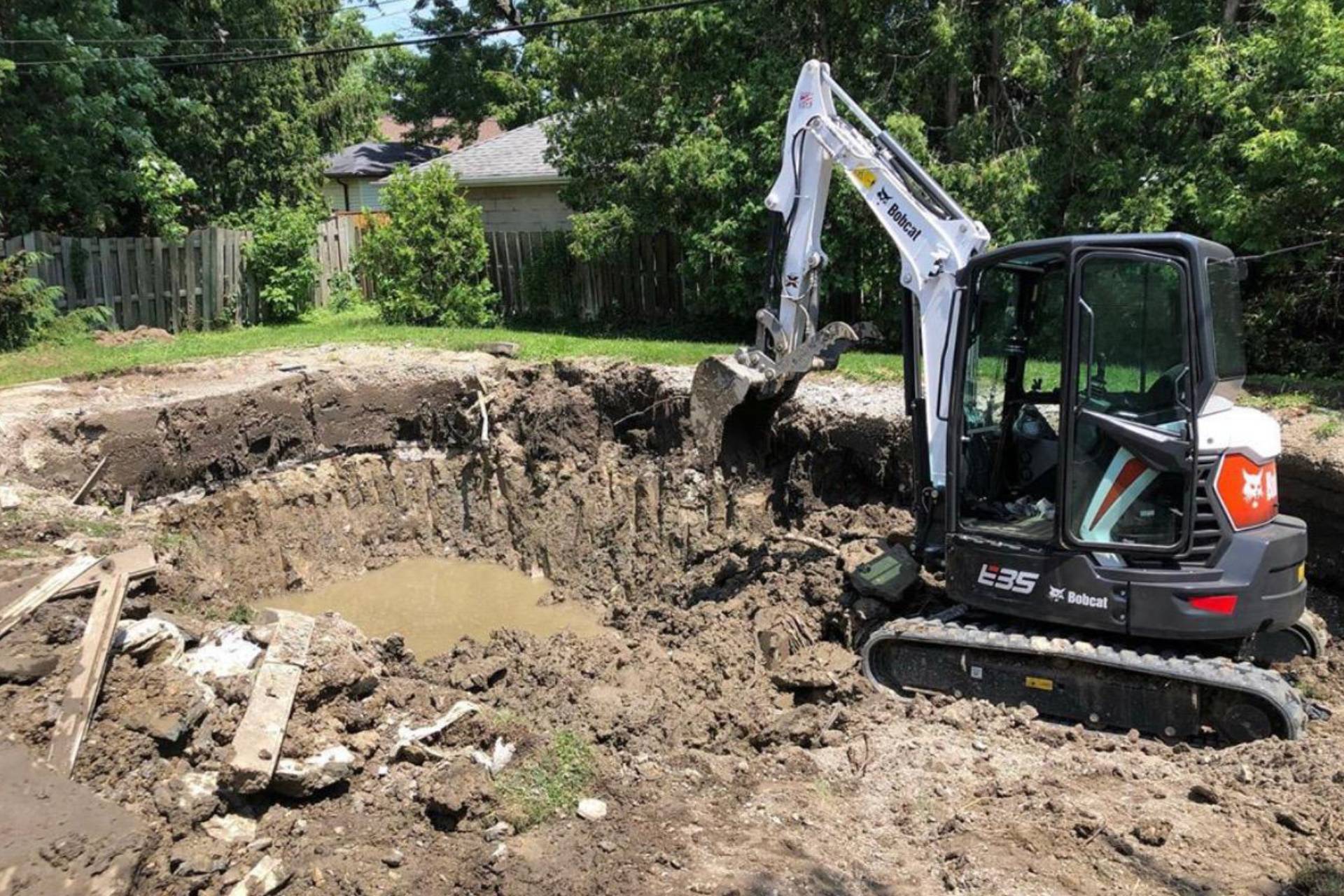
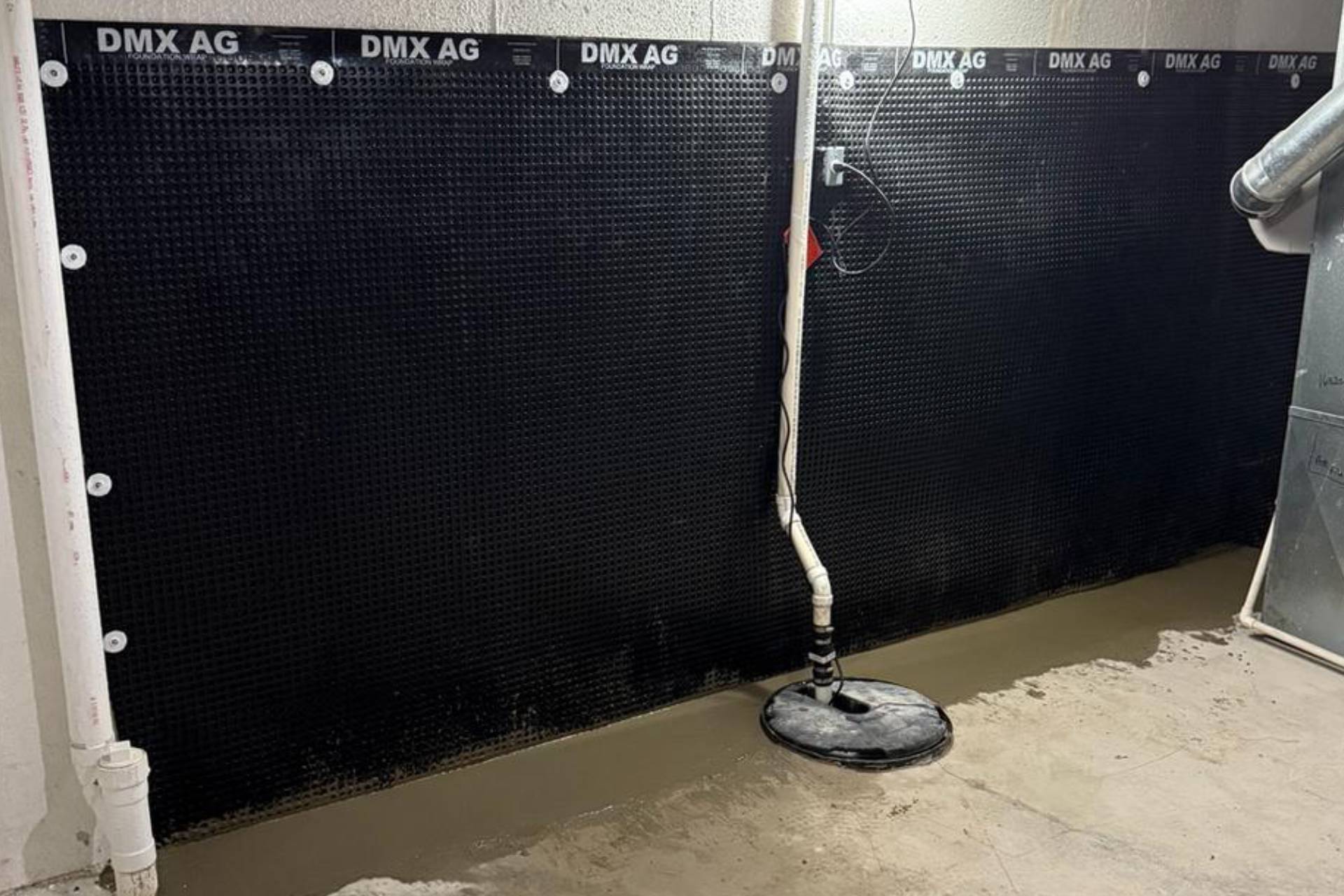
Then the walls. Older Ferndale foundations are clay tile or early block, and the clay drain tile around the footing is long since full of silt. Water sits against the wall, finds the mortar joints and the cove joint where wall meets floor, and comes in as a slow seep rather than a gush. Interior drain tile and a sump fix that. Digging the outside is rarely worth it on a 40-foot lot with a driveway down one side.
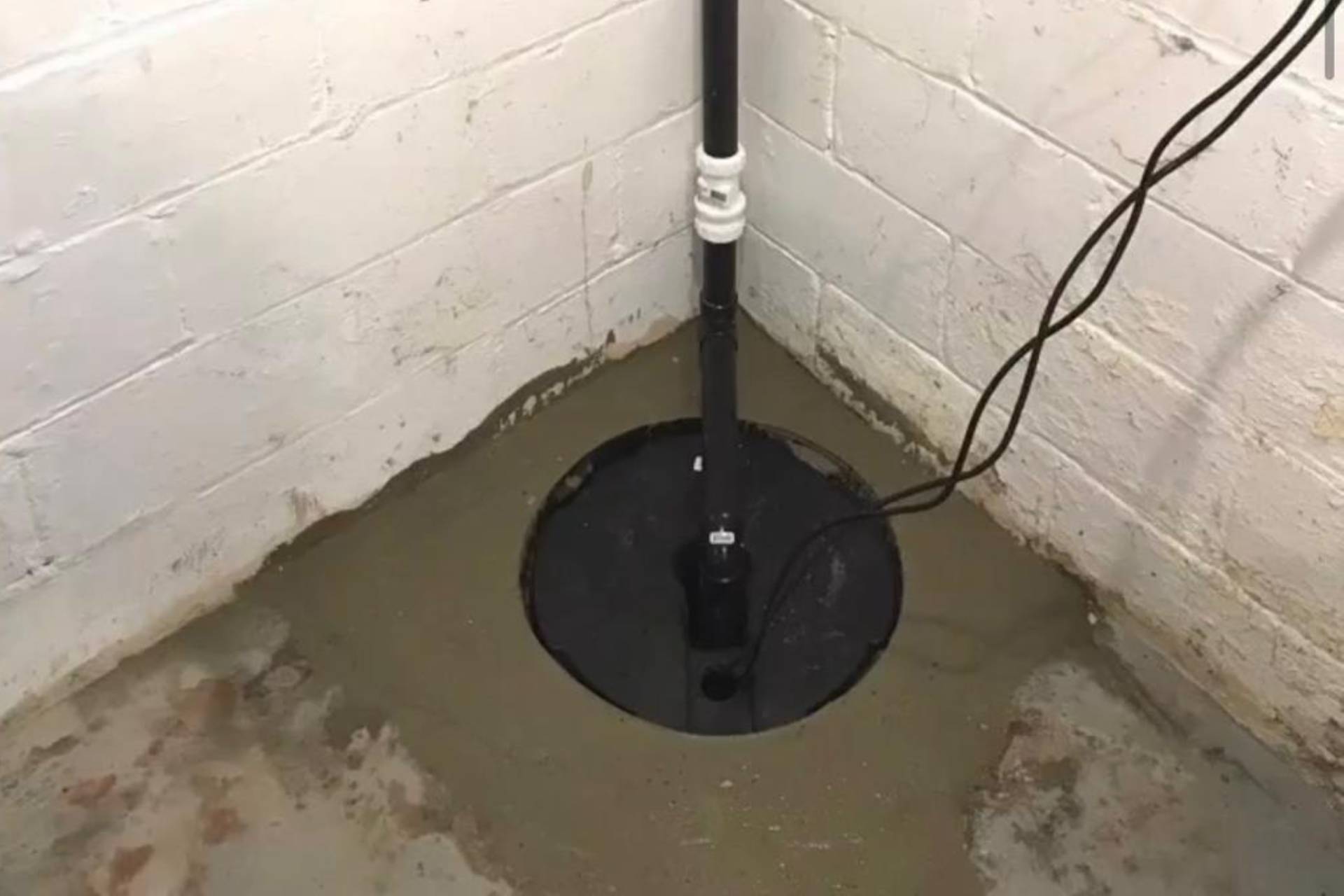
A lot of Ferndale houses never had a sump at all. The footing drains, where they exist, were tied into the sewer or simply quit. If we add interior drain tile, we add a sump to go with it, and we’d put a battery or water-powered backup behind the main pump. The July 2021 storm came with hail and wind across the county, which is exactly the kind of weather that knocks power out on the same night the basement needs the pump.
Small basements, careful work
Most basements here are low and packed. We cover what we can, cut finished walls back only as far as the drain tile requires, and carry the broken concrete out ourselves. You’re living in the house while we work, and we plan around that.