Clinton Township is where the Clinton River collects itself
The township took its name from the river back in 1824, and the river still runs the show. The North Branch and the Middle Branch both come down out of northern Macomb and join the main stem inside the township. The land is flat lake-plain clay, and in a lot of neighborhoods the ground stays soaked for days after a wet spring rain.
People have been fighting that for a long time. After the April 1947 flood, the biggest the area had seen since at least 1934, a relief channel was cut, the Clinton River Spillway, and it has carried floodwater straight to Lake St. Clair since 1951. The township bought a parcel of spillway land from the county in 2021. The spillway helps the river. It doesn’t do anything for the water sitting in the clay next to your foundation.
June 26, 2021, and the difference between two kinds of water
That Saturday morning Clinton Township police swam out to pull an 82-year-old woman from a car that had been swept off Millar Road. Basements across the township took water the same weekend. Macomb wasn’t even in the first federal disaster declaration. It took an appeal before the county was added in September.
Here’s what we want every homeowner here to understand. There were two kinds of water that weekend. Some basements took groundwater through the walls and the floor joint because the clay was saturated and the old tile couldn’t keep up. Many more took sewer water backward through the floor drain because the system was overloaded. Those are different problems. Drain tile and a sump handle the first. A backwater valve on the main line handles the second. If a contractor offers one fix for both, ask questions.
It wasn’t new, either. In July 2013 basements flooded on Hillcrest near Cass and Groesbeck after one overnight storm.
South end versus north end
The older part of the township, roughly south of 16 Mile and around Cass, Groesbeck and Gratiot, is mostly 1950s and 1960s ranches and brick bungalows on concrete block. Expect mortar joint leaks, plugged clay tile and a sump pit that may be original or may not exist at all. North toward Hall Road and the Partridge Creek area the houses get newer, with more 1980s and 1990s colonials on poured walls. Those leak at shrinkage cracks and tie-rod holes, and the backfill around them is still settling in places.
How we’d approach your house
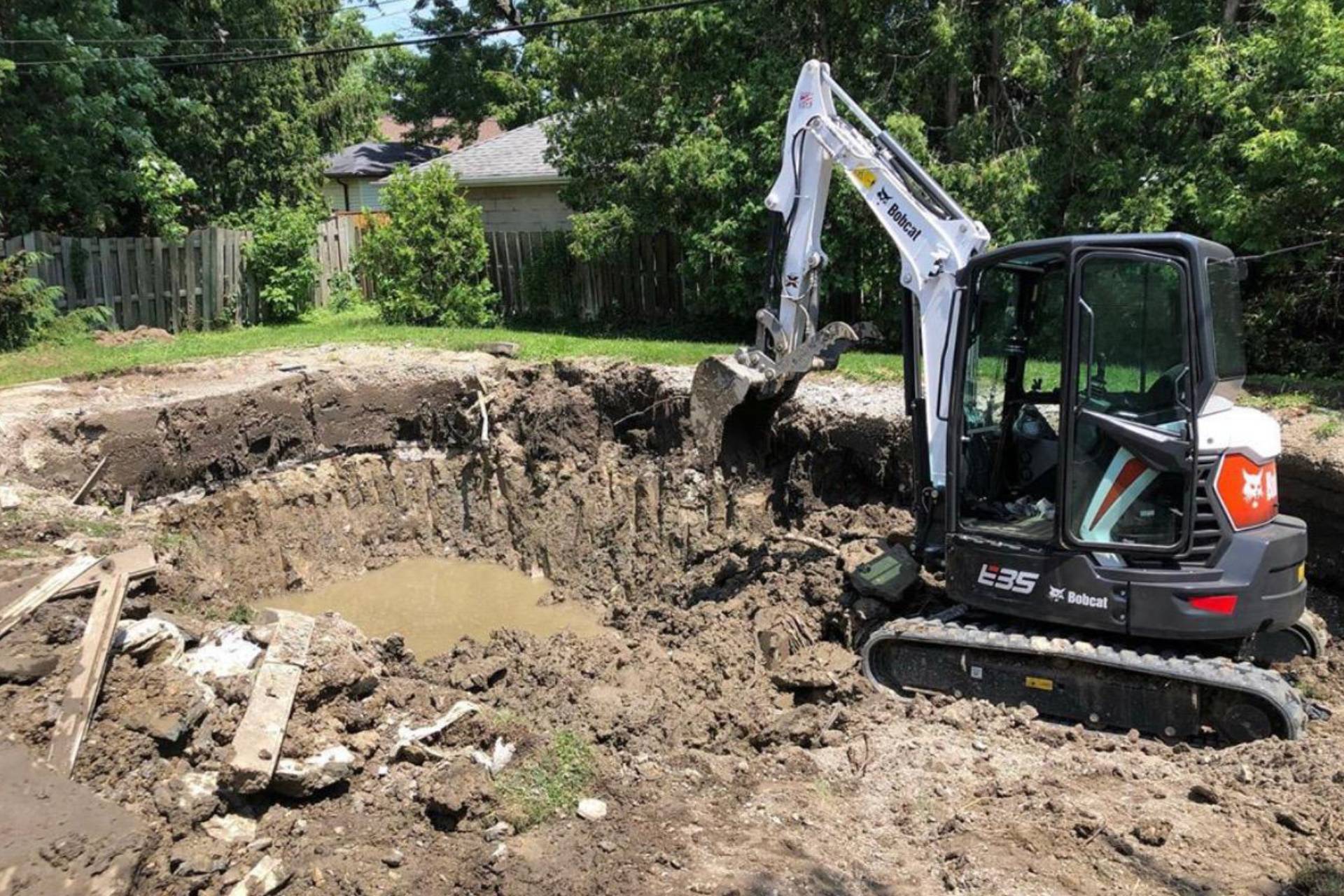
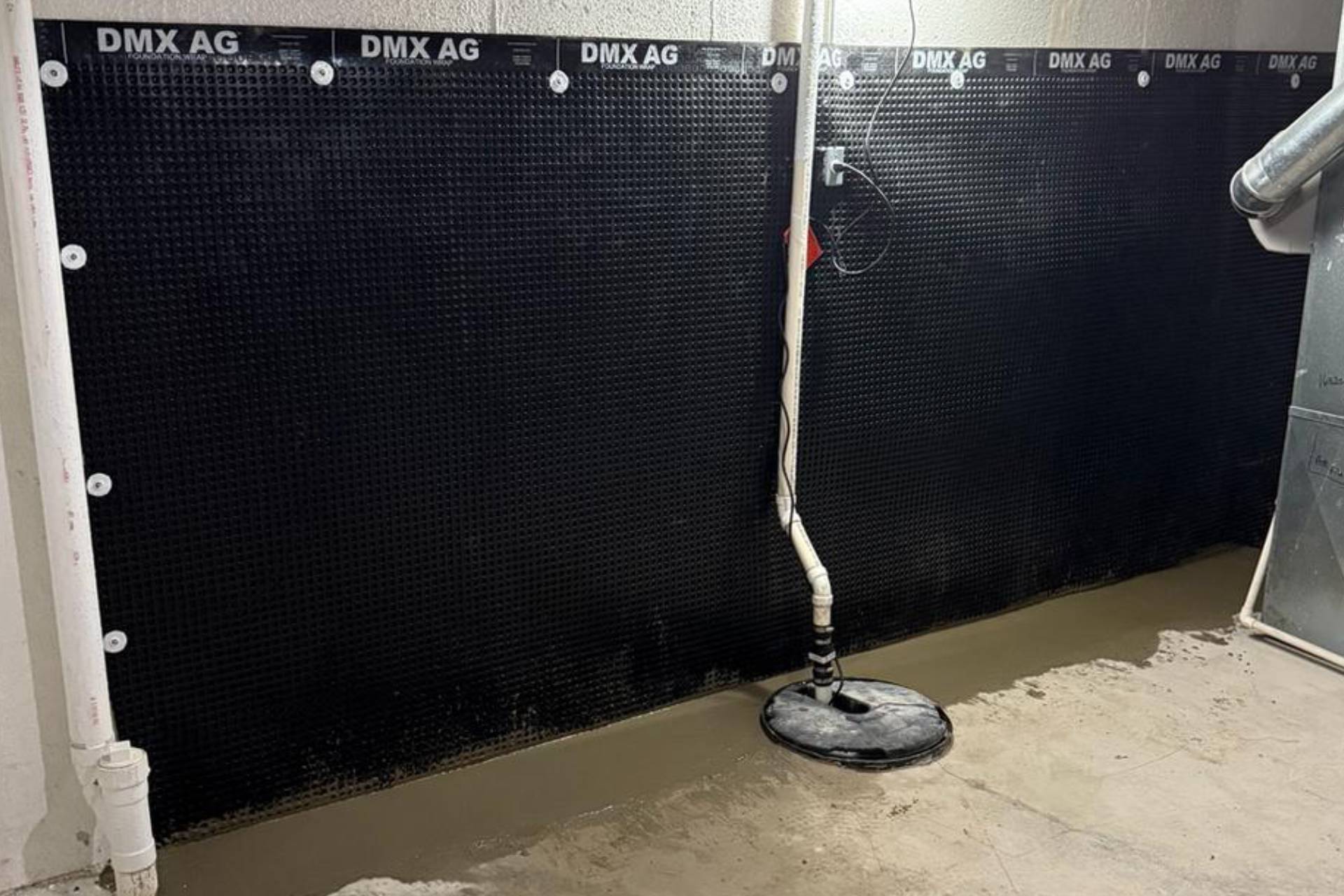
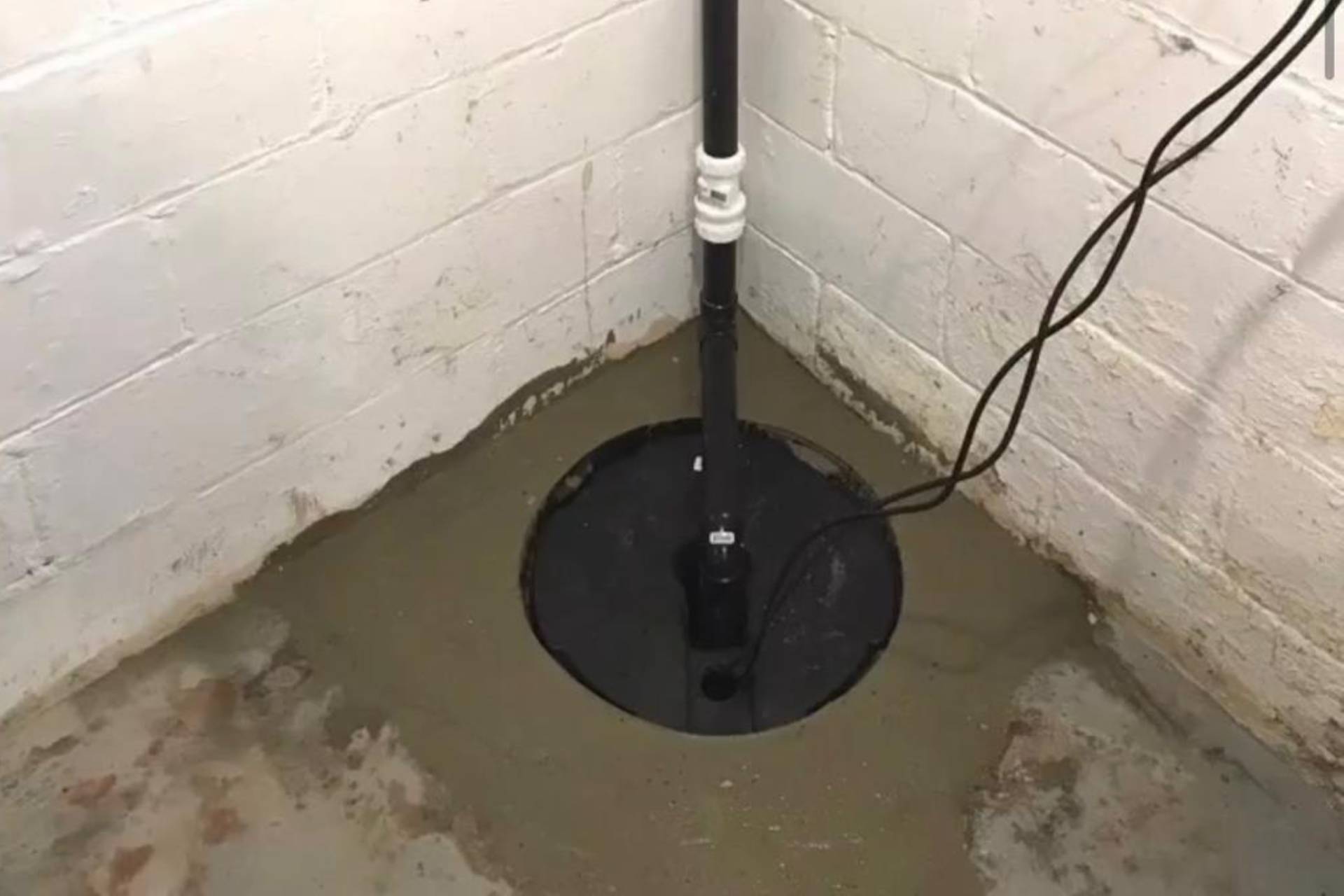
First we figure out which water you’ve got. That means looking at where it shows up, at what point in the storm, and whether it smells. Then we look outside. A township backyard that ponds after every rain sometimes has a culvert problem, and that’s a call to the county road department, not to us. If it’s groundwater, we usually go with interior drain tile and a sump with a battery or water-powered backup, since power tends to drop in exactly the storms that matter. Near the river branches we size everything up a notch.
If it’s a single crack in a poured wall, we inject it and leave the rest alone. Not every wet spot needs a system.
One more thing about the newer houses up by Hall Road. A lot of them have finished basements that went in years after the house was built, often right over a wall that had a small, quiet leak nobody noticed. When that leak finally shows up as a stained baseboard or a musty closet, the drywall has usually been soaking it up for a while. Pull back a corner and look before you assume the worst, and before you assume it’s nothing.