Basements in Bloomfield Hills are older and bigger than people expect
Bloomfield Hills was farmland until wealthy Detroit families started buying it up around 1900. It became a village in 1927 and a city in 1932, and a lot of the houses we get called to went up in that same stretch, the years when Christ Church Cranbrook was consecrated (1928) and St. Hugo of the Hills was being built (1931 to 1936). So when someone tells us their house is “old,” here it can mean ninety-plus years and a foundation of stone or brick that nobody has looked at closely since the furnace was converted.
Those walls aren’t bad. They’re just different. Mortar between fieldstone softens over decades, and water finds the soft spots first. The clay drain tile laid around the footings back then has usually silted up or been crushed by tree roots, so it stopped doing anything a long time ago.
Hills, ravines and the walkout problem
This is moraine country, not the flat clay plain you get down in Royal Oak or out in Macomb. The ground rolls. Many lots near Lone Pine, Hickory Grove and the Cranbrook end of town slope hard enough that the house has a walkout or a half-exposed lower level. Water moves fast through the sand and gravel pockets in these hills, then stops dead when it reaches a clay lens and runs sideways along it. That’s how one corner of a basement can be wet every spring while the rest stays bone dry.
On a walkout, the uphill wall is the one taking the water. The downhill side is usually fine. We see a lot of people who’ve spent money sealing the wrong wall.
What we’d actually recommend
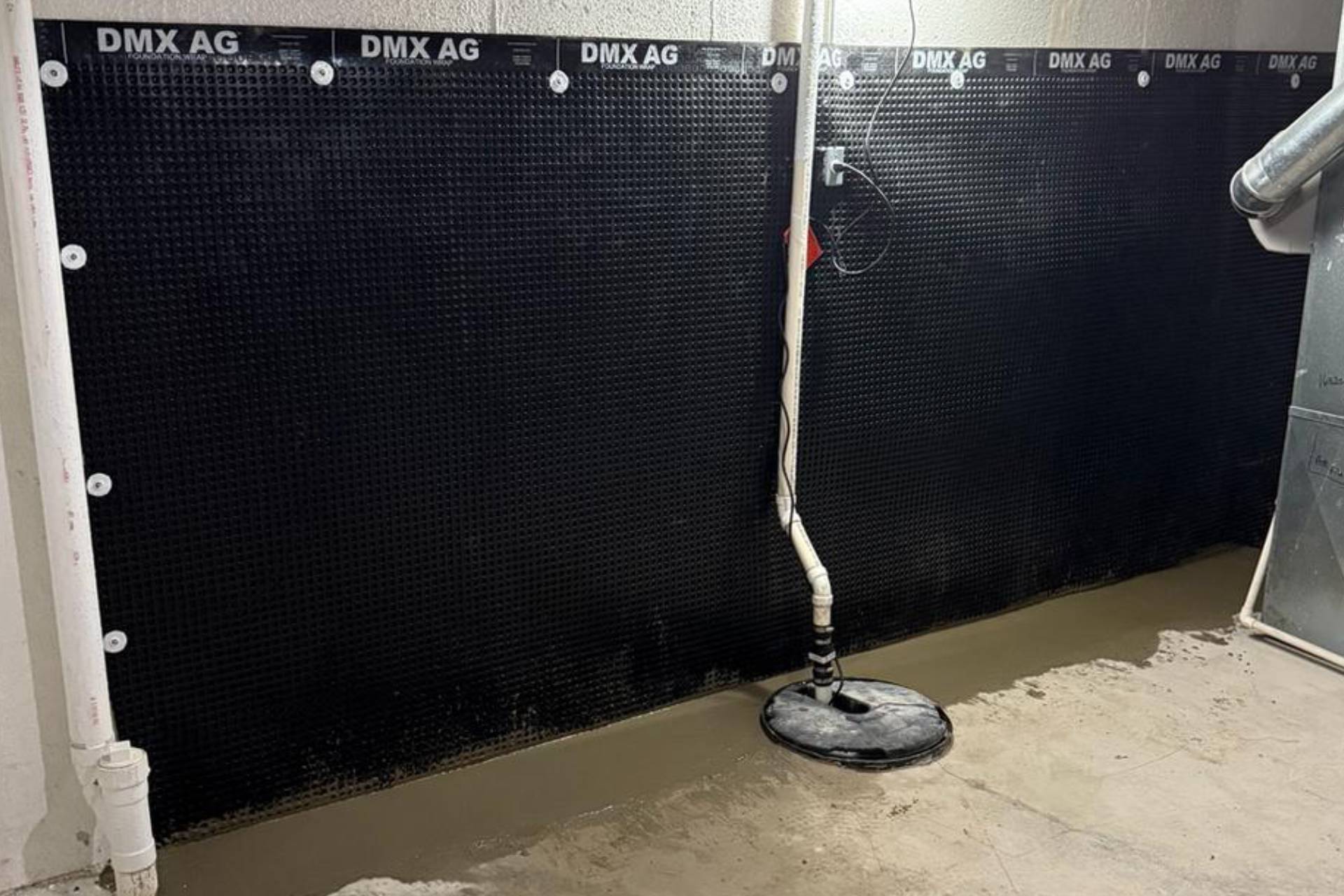
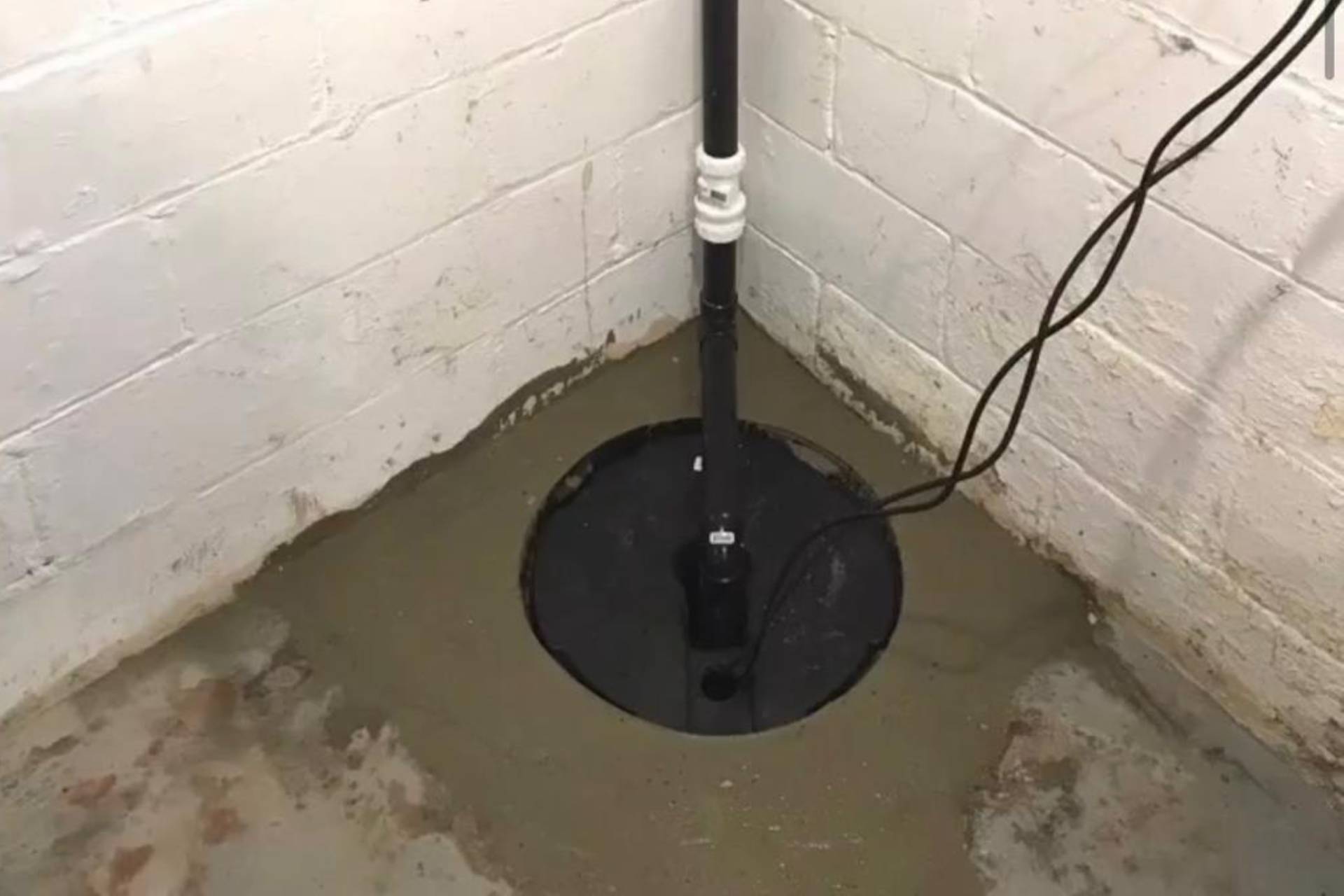
For a stone or brick foundation under a finished lower level, we lean toward an interior drain system more often than not. Digging out the uphill side of a 1930s house means fighting mature trees, stone terraces, irrigation, sometimes a pool deck, and you still end up with a wall that’s porous all the way through. An interior system catches what comes through and sends it to a sump. It’s honest about what that old wall is.
There are exceptions. If a newer addition was poured against an old wall and the seam between them is the leak, that joint usually needs to be dug and sealed from outside. Same for a block wall that’s started to bow. Our exterior waterproofing crew will tell you straight if the outside is the only real fix.
And sometimes the answer is cheaper than either. A downspout dumping at the top of a slope, a patio pitched toward the house, a window well with no drain at the bottom. We’ll point those out before anything else.
The sewer side matters too
Bloomfield Hills drains to the Rouge River watershed, and its sanitary sewer runs into the Evergreen-Farmington Sewage Disposal System. The state required improvements to that system to cut down on sanitary sewer overflows, and the Oakland County Water Resources Commissioner manages the work. In plain terms, during a big storm the pipes downstream of you can fill up, and a basement floor drain is the lowest opening in the house.
If you’ve had sewage come up the floor drain even once, a backwater valve on the main line is worth a serious look. We camera the line first so we know what shape it’s in and where the valve can go.
Getting here
We’re based in Shelby Township, roughly 35 minutes from Woodward and Long Lake on a normal day. Estimates are free. If water is coming in at 2 a.m., call (586) 345-7292 and someone picks up.